Practice hazardous materials endorsement topics including placards, shipping papers, safety, and emergency response.
Last updated:
Where this page fits
Endorsements: CDL Hazmat Endorsement
This page is one checkpoint inside the CDL study guide. Use the map to move between the full outline, topic notes, practice questions, and focused weak-area review.
Protect people first when a material leaks, burns, or spills.
Notice route, parking, loading, and separation clues.
Avoid answers that continue with an unresolved hazard.
Hazmat endorsement study focuses on recognizing hazardous materials, using shipping papers, applying placards, separating incompatible materials, and responding safely to leaks, fires, or emergencies.
Shipping papers and emergency response information
Placards, labels, and hazard classes
Loading, unloading, parking, and route restrictions
Separation of incompatible materials
Driver response to spills, leaks, fires, and emergency scenes
How to study this topic
Why hazmat needs focused practice
Hazmat questions combine safety judgment with specific procedures. A missed detail can change the safest response in a spill, fire, or routing scenario.
What to review first
Start with shipping papers and placards, then practice loading restrictions, parking rules, route awareness, and emergency response.
Use documents before guessing
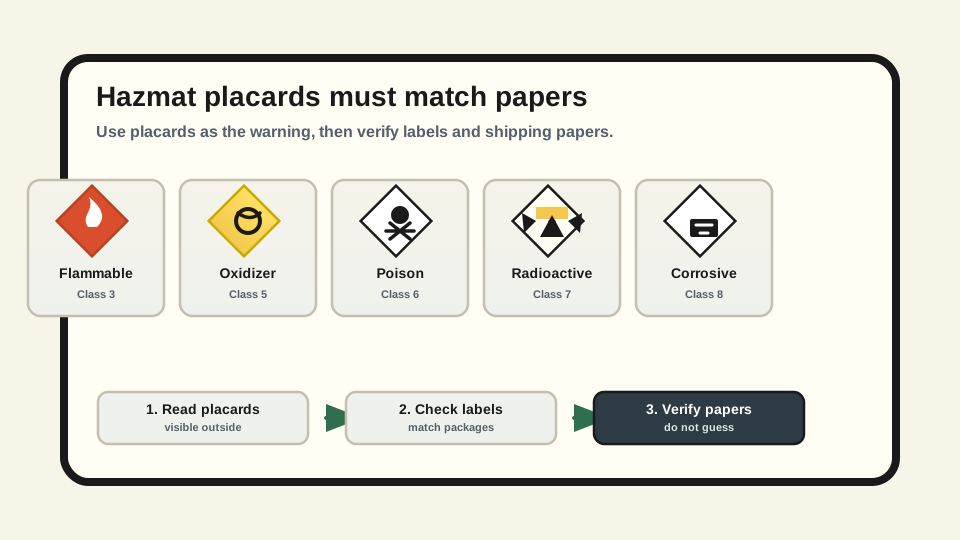
Many hazmat misses happen when the learner guesses from a placard or package clue alone. Study hazmat questions by connecting shipping papers, placards, labels, and emergency information before choosing a response.
Diagrams
Visual study aids.
Use these diagrams to understand the space, parts, or scoring terms behind the study topic.
CDL hazmat placards chartUse placards as the visible warning, then verify package labels and shipping papers before moving a hazmat load.
Quick answers
Answers before you practice.
Short answers for the common CDL questions on this topic.
01
What is on the CDL hazmat endorsement test?
Hazmat questions usually cover shipping papers, placards, labels, loading, separation, parking, routing, leaks, fires, and emergency response decisions.
What CDL hazmat test questions should I study first?
Start with shipping papers, placards, labels, hazard classes, emergency response information, and what to do when documents or placards are missing or inconsistent.
Are hazmat questions only about memorizing placards?
No. Placards matter, but hazmat practice also tests handling, separation, parking, routing, leaks, fire response, and protecting people when something goes wrong.
You are carrying a placarded hazardous materials load. Where should the shipping papers be kept while you are driving?
Placards, labels, and shipping papers must work together.
Shipping papers must be easy for the driver and emergency responders to find quickly. Keeping them visible or within immediate reach supports fast identification during an emergency.
Source focusFMCSA CDL Manual - Hazardous Materials: shipping papers and emergency information
Emergency responders may not be able to access paperwork locked inside the trailer.
The papers need to travel with the load, not stay at the office.
Hidden paperwork is not readily available in an emergency.
Study focusKnow where hazardous materials shipping papers should be kept during transportation.
Common trapTreating shipping papers as ordinary freight paperwork instead of emergency information.
Question 2
A shipping paper lists the proper shipping name, hazard class, and identification number. Why are these details important?
The proper shipping name, hazard class, and identification number help identify the hazard and support the correct emergency response.
Source focusFMCSA CDL Manual - Hazardous Materials: shipping paper entries
Shipping papers do not remove placard duties when placards are required.
Route restrictions still apply when a material or route requires them.
The details matter during transportation, especially during emergencies.
Study focusRecognize the purpose of key hazardous materials shipping paper entries.
Common trapMemorizing document terms without understanding their emergency-response purpose.
Question 3
You notice that the shipping papers for a hazmat load do not match the labels on several packages. What should you do before moving the load?
A mismatch between papers and package labels can mean the material is incorrectly described. The issue should be resolved before transportation.
A sealed package can still contain a dangerous hazard.
Label information does not automatically remove placard requirements.
The hazard remains relevant during transportation.
Study focusUse package labels as hazard clues for safe handling decisions.
Common trapIgnoring labels once packages are loaded inside the vehicle.
Question 7
You discover a leaking hazardous materials package during a stop. What is the safest first response?
The safest response is to protect people and use emergency-response information. Drivers should not touch unknown hazardous material or spread contamination.
Damage location does not make an unsafe hazmat package acceptable.
Easy removal does not fix unsafe packaging.
Tape is not a substitute for proper packaging.
Study focusIdentify when damaged hazardous materials packaging should not be accepted.
Common trapTrying to manage damaged packaging during the trip instead of refusing unsafe transport.
Question 12
If a hazmat fire starts near your vehicle and you do not know exactly what material is involved, what is the safest action?
Unknown hazardous materials can react dangerously. The safest action is to protect people, contact emergency help, and use the documented emergency information.
Source focusFMCSA CDL Manual - Hazardous Materials: fire and emergency response
Opening packages can expose the driver and worsen the hazard.
Driving into smoke can put the driver and others at greater risk.
The wrong extinguisher or method can make some hazmat fires worse.
Study focusChoose a safe emergency response when the exact hazardous material is uncertain.
Common trapTaking direct action before identifying the hazard and protecting people.
Question 13
A hazmat package is damaged before loading and you can see residue around the closing. What is the safest decision?
A damaged package can leak or become unsafe in transit. The safe choice is to stop the loading decision until the problem is resolved by the responsible party.
Location in the trailer does not fix a damaged hazmat package.
A driver should not hide or patch a hazard to keep the load moving.
Trailer capacity does not make damaged packaging safe.
Study focusChoose a safe loading decision when hazmat packaging appears damaged.
Common trapTreating damaged packaging as a minor freight problem.
Question 14
You are hauling a placarded load and a route sign restricts hazardous materials through a tunnel. What should you do?
Hazmat route restrictions are safety requirements. The driver should follow allowed routing and should not enter a restricted route to save time.
Source focusFMCSA CDL Manual - Hazardous Materials: routes and restricted areas
Light traffic does not remove a hazmat restriction.
Removing placards to bypass a restriction is unsafe and improper.
Following distance does not make a restricted route allowed.
Study focusRespond correctly to route restrictions for hazardous materials.
Common trapChoosing convenience over routing restrictions.
Question 15
Why should incompatible hazardous materials be separated during loading?
Incompatible materials may create a greater hazard if mixed. Separation rules help prevent fire, toxic gas, contamination, or other dangerous reactions.
Source focusFMCSA CDL Manual - Hazardous Materials: segregation and separation
Cleanliness is not the main safety reason for separation.
Placard duties are not removed by separation.
The hazard can exist on any route.
Study focusUnderstand why separation of incompatible materials matters.
Common trapThinking separation is only a paperwork or loading-space issue.
Question 16
A placarded trailer begins leaking at a rest area. Which first action is usually safest?
A hazmat leak should be treated as a people-protection problem first. Keep people away, avoid contact, and use the required information to guide the emergency response.
Opening doors can expose people or worsen the release.
Continuing the trip can spread the hazard.
Washing unknown material into a drain can create a larger hazard.
Study focusChoose a safe first response to a hazmat leak.
Common trapTrying to move or clean up a material before identifying the hazard.
Question 17
What is the best reason to keep hazmat shipping papers within immediate reach while driving?
Shipping papers identify the material and support emergency response. They must be available quickly because the driver may be injured or unable to explain the load.
Billing is not the safety reason for immediate access.
Paperwork does not replace package inspection.
Shipping papers do not remove route restrictions.
Study focusExplain why hazmat shipping papers must be easy to find.
Common trapTreating shipping papers as ordinary delivery paperwork.
Question 18
A shipping paper is missing the emergency response telephone number when one is required. What should happen before transportation?
Required emergency response information supports quick action during an incident. Missing required information should be corrected before transportation.
Source focusFMCSA CDL Manual - Hazardous Materials: emergency response information
A personal phone number does not replace required emergency information.
Correct placards do not fix incomplete required papers.
Hiding incomplete information makes emergency response harder.
Study focusRecognize missing emergency information on hazmat paperwork.
Common trapAssuming placards alone are enough when required paperwork is incomplete.
Question 19
What do placards primarily communicate?
Placards warn other road users and emergency responders about the hazard class or type of danger associated with the load.
Source focusFMCSA CDL Manual - Hazardous Materials: placards and hazard communication
Placards do not identify the driver.
Delivery timing is not a placard purpose.
Freight price is not a hazard communication item.
Study focusIdentify the safety purpose of hazmat placards.
Common trapThinking placards are only a company or freight label.
Question 20
A placard is torn so the hazard class cannot be read clearly. What should be done before the vehicle moves?
Placards must communicate the hazard clearly. A damaged or unreadable placard defeats its safety purpose and should be corrected before transportation.
A partially unreadable placard may fail to warn responders.
A blank cover removes hazard communication.
Darkness does not reduce placard requirements.
Study focusRespond correctly to damaged or unreadable hazmat placards.
Common trapAssuming a partly visible placard is good enough.
Question 21
Why is smoking especially dangerous near some hazardous materials?
Some hazardous materials release vapors or contain substances that can ignite. Smoking can create an ignition source.
Source focusFMCSA CDL Manual - Hazardous Materials: smoking and fire risk
Smoking does not change paperwork validity.
Smoking does not change trailer weight.
Placards remain the hazard communication device.
Study focusUnderstand ignition-source risks near hazardous materials.
Common trapTreating smoking rules as ordinary workplace preference instead of fire prevention.
Question 22
You discover a placarded load is parked too close to an open flame or active welding work. What is the safest response?
Ignition sources can create serious risk around hazardous materials. The priority is to protect people and avoid exposure to fire or explosion hazards.
Source focusFMCSA CDL Manual - Hazardous Materials: fire prevention and parking
Correct paperwork does not remove an ignition hazard.
Turning placards does not change the hazard.
Opening the trailer can expose the driver to danger.
Study focusChoose a safe response when hazmat is near an ignition source.
Common trapRelying on correct paperwork while ignoring the physical hazard.
Question 23
What should a driver do if emergency responders ask what hazardous material is on the vehicle?
Emergency responders need accurate material information. Shipping papers and emergency response information are the proper source.
Picking one entry does not resolve a safety conflict.
Labels are part of hazard communication and cannot be ignored.
Paperwork is also required hazard information and cannot be ignored.
Study focusHandle inconsistent hazmat labels and paperwork safely.
Common trapChoosing one source casually when required hazard information conflicts.
Question 25
Why should hazmat drivers avoid parking where a leak could reach drains, waterways, or crowded areas?
Parking choices matter because a release can spread, contaminate, or expose people. Safer parking reduces the chance that a leak becomes a larger emergency.
Study focusRecognize why parking location matters for hazmat loads.
Common trapThinking parking is only a convenience issue.
Question 26
Which answer best describes the driver's role with hazardous materials?
Hazmat driving requires more than steering the vehicle. The driver must understand the safety information well enough to transport the load and respond safely.
Study focusApply safe parking decisions for hazardous materials.
Common trapTreating hazmat parking as only a convenience issue.
Question 36
Why should you never smoke near certain hazardous materials?
Many hazardous materials are flammable, explosive, or reactive. Smoking or open flame can create a serious hazard.
Source focusCDL Manual - Hazardous Materials: smoking and fire safety
Study focusRecognize ignition risks around hazardous materials.
Common trapTreating smoking rules as general etiquette instead of fire prevention.
Question 37
A hazmat load requires placards, but one placard is missing before departure. What should you do?
Required placards must be displayed correctly before transportation. Hazard flashers or partial placarding do not replace required hazard communication.
Study focusUnderstand the purpose of hazmat identification numbers.
Common trapIgnoring identification numbers as minor paperwork details.
Question 41
Why should a hazmat driver not guess how to clean up a spill?
Hazardous materials can react differently to water, air, heat, or other substances. Use emergency information and trained response rather than guessing.
Common trapTrying to solve a hazmat spill without identifying the material and guidance.
Question 42
Which answer best describes safe hazmat securement?
Hazmat packages need securement like other cargo, with added concern for leaks, damage, and hazard release.
Source focusCDL Manual - Hazardous Materials: loading and securement
Study focusApply securement principles to hazardous materials.
Common trapSeparating hazmat rules from normal cargo securement.
Question 43
What should a driver verify about hazmat packages before accepting them?
Hazmat packages must be in safe condition with required communication visible. Leaking, damaged, or incorrectly marked packages should be corrected before transport.
Study focusInspect hazmat package markings for required communication.
Common trapChecking labels but not package markings.
Question 59
When should a hazmat driver use emergency response information?
Emergency response information guides safe decisions during hazmat incidents. It does not replace prevention, but it is critical when something goes wrong.
Source focusCDL Manual - Hazardous Materials: emergency response information
Study focusKnow when emergency response information is needed.
Common trapThinking emergency response information is paperwork for office use only.
Question 60
Which answer best describes the driver's responsibility for placards before departure?
Before departure, the driver must not ignore placard problems. Correct hazard communication protects responders and the public.