Where this page fits
CDL General Knowledge
This page is one checkpoint inside the CDL study guide. Use the map to move between the full outline, topic notes, practice questions, and focused weak-area review.
Core commercial driving safety, inspection, road rules, cargo, and decision-making practice.
This page is one checkpoint inside the CDL study guide. Use the map to move between the full outline, topic notes, practice questions, and focused weak-area review.
General knowledge is the broad foundation for CDL learners. Practice safe driving, inspections, cargo basics, road decisions, and general knowledge test questions in more than one question style.
Vehicle inspection, communication, safe driving, cargo safety, road hazards, emergency response, and the reasoning behind common CDL general knowledge questions.
One rule can become many useful questions by changing the vehicle, weather, road condition, or failure scenario.
Class A, Class B, permit practice, state pages, and endorsement pages all depend on the general knowledge base, so this page should route learners into the next topic only after the broad safety foundation is clear.
Use these diagrams to understand the space, parts, or scoring terms behind the study topic.
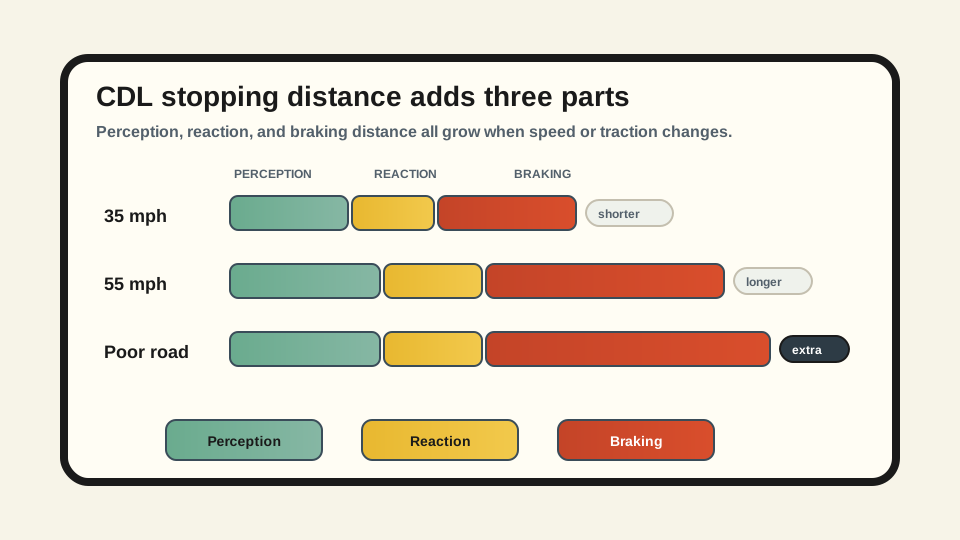
Short answers for the common CDL questions on this topic.
The general knowledge test checks core CDL safety topics such as inspection, speed, space, communication, cargo, hazards, emergencies, and safe commercial-driver decisions.
Take Test 1Start with inspection, safe speed, following distance, visual search, cargo responsibility, warning devices, emergency response, and driver fitness questions.
Use each answer explanation to name the safety rule behind the question. If several misses share one skill, stop mixed practice and review that topic.
Review question strategyBecause of blind spots, you cannot see everything behind you. Using a helper is the most important safety rule for backing. Always agree on a hand signal for 'stop' before you begin.
Study focusUse safe backing, turning, and basic-control habits.
Common trapBacking without a helper or failing to stop when visibility is uncertain.
Good drivers look 12 to 15 seconds ahead. At highway speeds, this is about a quarter of a mile. This gives you time to adjust speed or change lanes to avoid hazards.
Study focusChoose safe speed, spacing, and visual search habits for commercial vehicles.
Common trapDriving at passenger-car speeds without accounting for weight, space, weather, or grade.
Your safe speed on a downgrade depends primarily on the total weight of the vehicle and cargo, the length and steepness of the grade, road conditions, and weather. Heavier vehicles require more braking power to counteract gravity.
Study focusUnderstand cargo weight, securement, and load safety responsibilities.
Common trapAssuming cargo safety is only the shipper or dispatcher responsibility.
Federal regulations require a minimum tread depth of 4/32 inch in every major groove on front (steering) tires. Other tires require at least 2/32 inch.
Study focusUse pre-trip inspection habits to identify unsafe vehicle-system defects before driving.
Common trapMemorizing a walk-around order without understanding which defects make the vehicle unsafe.
Use high beams whenever you can to see further ahead, provided it is safe and legal. You must dim them when within 500 feet of an oncoming vehicle or when following another vehicle within 500 feet.
Study focusApply core CDL safe-driving rules to common road and vehicle situations.
Common trapMemorizing rules without applying them to driving scenarios.
Alcohol first affects judgment and self-control. For commercial drivers, it is illegal to operate a CMV with a BAC of 0.04% or higher, not 0.08%.
Study focusUnderstand state-specific CDL requirements, handbook notes, and licensing context.
Common trapUsing generic CDL knowledge without checking state-specific requirements.
Hydroplaning occurs when water builds up in front of your tires, causing them to lift off the road surface. You lose steering and braking control. To recover, release the accelerator and do not brake hard.
Study focusUse pre-trip inspection habits to identify unsafe vehicle-system defects before driving.
Common trapMemorizing a walk-around order without understanding which defects make the vehicle unsafe.
When a tire blows out, grip the steering wheel firmly and stay off the brakes. Braking hard can cause a skid or loss of control. Let the vehicle slow down naturally before applying brakes gently.
Study focusUse pre-trip inspection habits to identify unsafe vehicle-system defects before driving.
Common trapMemorizing a walk-around order without understanding which defects make the vehicle unsafe.
You must inspect the cargo and its securing devices within the first 50 miles after beginning a trip. After that, inspect again after every break and after you have driven for 3 hours or 150 miles, whichever comes first.
Study focusUnderstand cargo weight, securement, and load safety responsibilities.
Common trapAssuming cargo safety is only the shipper or dispatcher responsibility.
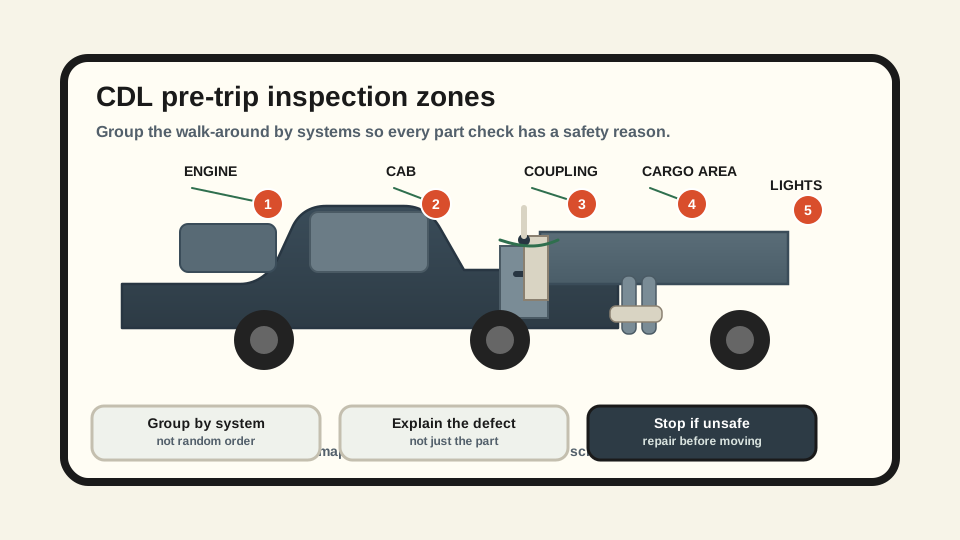
Safety is the most important reason for a pre-trip inspection. Finding and fixing a defect before driving helps prevent breakdowns and crashes on the road.
Study focusUse pre-trip inspection habits to identify unsafe vehicle-system defects before driving.
Common trapMemorizing a walk-around order without understanding which defects make the vehicle unsafe.
Electrical fires require a B:C or A:B:C rated extinguisher. Using water or water-based foam on an electrical fire can result in a severe electric shock.
Study focusApply safe loading, separation, parking, routing, and emergency-response decisions for hazmat.
Common trapChoosing a convenient action instead of the action that protects people and isolates the hazard.
Engine retarders (Jake brakes) apply strong braking force to the drive wheels only. On slippery surfaces, this sudden braking force can cause the drive wheels to lose traction, leading to a dangerous skid.
Study focusRespond safely to hazards, emergencies, traction loss, and unsafe conditions.
Common trapReacting late or using sudden braking/steering when controlled action is safer.
The rule of thumb is 1 second of following distance for every 10 feet of vehicle length at speeds under 40 mph. For speeds over 40 mph, add 1 additional second. A 60-foot truck at 55 mph needs 7 seconds of space.
Study focusChoose safe speed, spacing, and visual search habits for commercial vehicles.
Common trapDriving at passenger-car speeds without accounting for weight, space, weather, or grade.
A broken exhaust system can allow deadly, odorless carbon monoxide gas to enter the cab, which can cause drowsiness, illness, or death to the driver.
Study focusRecognize placard, label, marking, and hazard-class requirements for hazmat loads.
Common trapFocusing only on the load name and ignoring placards, labels, and hazard class clues.
The first step in a vehicle fire is to get the vehicle off the road and stop in an open area, clear of buildings, trees, brush, and other vehicles to prevent the fire from spreading.
Study focusApply safe loading, separation, parking, routing, and emergency-response decisions for hazmat.
Common trapChoosing a convenient action instead of the action that protects people and isolates the hazard.
Eating, using a phone, or reading while driving are major physical and cognitive distractions that take your eyes, hands, and mind away from the critical task of driving.
Study focusRespond safely to hazards, emergencies, traction loss, and unsafe conditions.
Common trapReacting late or using sudden braking/steering when controlled action is safer.
If you are being tailgated, increase the space in front of your vehicle. This allows you to brake more smoothly and gradually, reducing the chance that the tailgater will crash into your rear.
Study focusChoose safe speed, spacing, and visual search habits for commercial vehicles.
Common trapDriving at passenger-car speeds without accounting for weight, space, weather, or grade.
You should brake to a safe speed before entering a curve. Once in the curve, maintain speed or accelerate slightly, as this helps stabilize the vehicle. Never brake hard in a curve.
Study focusChoose safe speed, spacing, and visual search habits for commercial vehicles.
Common trapDriving at passenger-car speeds without accounting for weight, space, weather, or grade.
Most serious skids result from driving too fast for road conditions, over-braking, over-steering, or over-accelerating. Speed is the primary factor in losing traction.
Study focusUse pre-trip inspection habits to identify unsafe vehicle-system defects before driving.
Common trapMemorizing a walk-around order without understanding which defects make the vehicle unsafe.
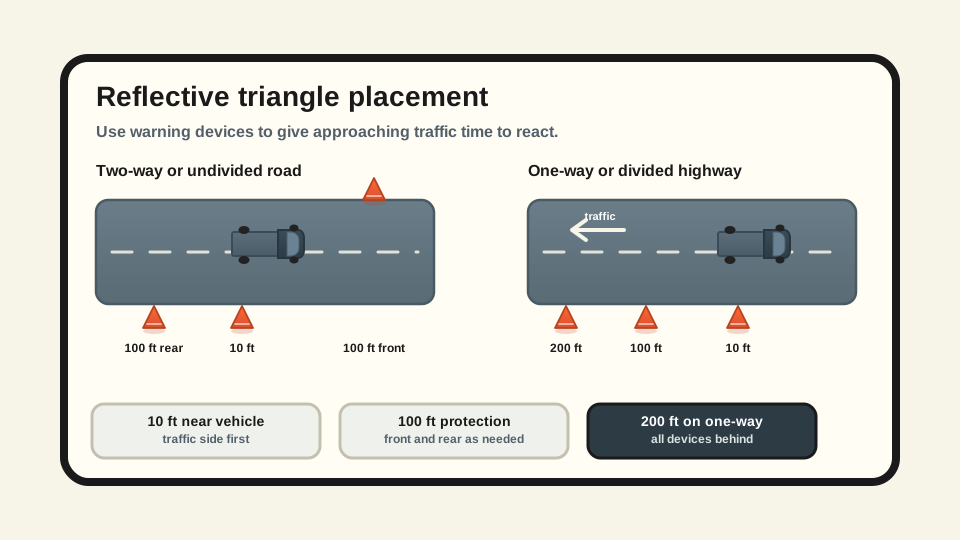
On a two-lane road carrying traffic in both directions, place warning devices within 10 feet of the front or rear corners, about 100 feet behind, and about 100 feet ahead of the vehicle.
Study focusRespond safely to hazards, emergencies, traction loss, and unsafe conditions.
Common trapReacting late or using sudden braking/steering when controlled action is safer.
At night, your visibility is limited to the reach of your headlights. You must adjust your speed so you can safely stop within that visible distance.
Study focusUse inspection habits to catch unsafe defects before driving.
Common trapChecking only obvious items and missing brake, tire, coupling, or defect-report steps.
While avoiding fines is good, safety is the primary reason for inspections. A defect found during an inspection can prevent a breakdown or fatal crash.
Study focusUse inspection habits to catch unsafe defects before driving.
Common trapChecking only obvious items and missing brake, tire, coupling, or defect-report steps.
Federal regulations require that emergency warning devices (like reflective triangles) be placed within 10 minutes of stopping on the shoulder or traveled portion of the road.
Study focusRespond safely to hazards, emergencies, traction loss, and unsafe conditions.
Common trapReacting late or using sudden braking/steering when controlled action is safer.
To recover from hydroplaning, release the accelerator and push in the clutch. Do not use the brakes, as this can cause the wheels to lock and result in a skid.
Study focusRespond safely to hazards, emergencies, traction loss, and unsafe conditions.
Common trapReacting late or using sudden braking/steering when controlled action is safer.
Following too closely (tailgating) severely reduces your reaction time and stopping distance, making it a leading cause of crashes.
Study focusUnderstand state-specific CDL requirements, handbook notes, and licensing context.
Common trapUsing generic CDL knowledge without checking state-specific requirements.
Black ice is a thin layer of clear ice. Because it is clear, you can see the dark asphalt underneath, making the road appear wet rather than icy.
Study focusRespond safely to hazards, emergencies, traction loss, and unsafe conditions.
Common trapReacting late or using sudden braking/steering when controlled action is safer.
You should check your mirrors regularly (about every 5 to 8 seconds) to be aware of traffic around you and to monitor your vehicle and trailer.
Study focusChoose safe speed, spacing, and visual search habits for commercial vehicles.
Common trapDriving at passenger-car speeds without accounting for weight, space, weather, or grade.
Speeding or driving too fast for conditions is the leading cause of fatal crashes involving large trucks.
Study focusChoose safe speed, spacing, and visual search habits for commercial vehicles.
Common trapDriving at passenger-car speeds without accounting for weight, space, weather, or grade.
The rule is 1 second per 10 feet of length, plus 1 second if going over 40 mph. For a 60-foot truck, that is 6 seconds + 1 second = 7 seconds.
Study focusChoose safe speed, spacing, and visual search habits for commercial vehicles.
Common trapDriving at passenger-car speeds without accounting for weight, space, weather, or grade.
To deal with an aggressive driver, do not engage. Get out of their way, avoid eye contact, ignore gestures, and report them if they are a severe danger.
Study focusChoose safe speed, spacing, and visual search habits for commercial vehicles.
Common trapDriving at passenger-car speeds without accounting for weight, space, weather, or grade.
Water can be used to cool down a tire fire. Using water on electrical, gasoline, or grease fires can spread the fire or cause electrocution.
Study focusApply safe loading, separation, parking, routing, and emergency-response decisions for hazmat.
Common trapChoosing a convenient action instead of the action that protects people and isolates the hazard.
If the drive wheels lose traction due to over-acceleration or slippery roads, the tractor can spin out, potentially causing a jackknife.
Study focusControl off-tracking, rollover, rearward amplification, and trailer movement risks.
Common trapTurning or steering too sharply without accounting for trailer movement.
Loading heavy cargo high in the trailer raises the center of gravity, making the vehicle top-heavy and much more likely to roll over in a curve or evasive maneuver.
Study focusApply safe loading, separation, parking, routing, and emergency-response decisions for hazmat.
Common trapChoosing a convenient action instead of the action that protects people and isolates the hazard.
The 'snubbing' technique involves braking firmly to 5 mph below your safe speed, then releasing them to allow cooling, repeating as necessary while the engine brake does most of the work.
Study focusChoose safe speed, spacing, and visual search habits for commercial vehicles.
Common trapDriving at passenger-car speeds without accounting for weight, space, weather, or grade.
Empty trucks lack the weight to press the tires firmly against the road. When heavy-duty brakes are applied, the tires easily lock up, reducing traction and increasing stopping distance.
Study focusUnderstand cargo weight, securement, and load safety responsibilities.
Common trapAssuming cargo safety is only the shipper or dispatcher responsibility.
Backing toward the driver's side (sight-side backing) allows you to see the path of the trailer directly out your window, rather than relying solely on mirrors for the blind side.
Study focusUse safe backing, turning, and basic-control habits.
Common trapBacking without a helper or failing to stop when visibility is uncertain.
A red triangle with an orange center on the rear of a vehicle indicates it is a slow-moving vehicle, such as a tractor or construction equipment, moving at 25 mph or less.
Study focusApply safe loading, separation, parking, routing, and emergency-response decisions for hazmat.
Common trapChoosing a convenient action instead of the action that protects people and isolates the hazard.
Mountain driving puts extreme stress on brakes. You must ensure your brakes are in perfect condition and know the route, including the location of runaway truck ramps.
Study focusApply safe loading, separation, parking, routing, and emergency-response decisions for hazmat.
Common trapChoosing a convenient action instead of the action that protects people and isolates the hazard.
You should NEVER move a severely injured person unless they are in immediate danger (like a burning vehicle). Moving them can worsen spinal or internal injuries.
Study focusApply safe loading, separation, parking, routing, and emergency-response decisions for hazmat.
Common trapChoosing a convenient action instead of the action that protects people and isolates the hazard.
Mirrors and antennas are exposed to the cold air and will freeze before the road surface. If ice forms on them, be prepared for black ice on the road.
Study focusChoose safe speed, spacing, and visual search habits for commercial vehicles.
Common trapDriving at passenger-car speeds without accounting for weight, space, weather, or grade.
Correct shifting ensures you have engine braking when needed and prevents stalling or getting stuck in neutral, which compromises your control of the vehicle.
Study focusUse inspection habits to catch unsafe defects before driving.
Common trapChecking only obvious items and missing brake, tire, coupling, or defect-report steps.
If headlights fail, immediately turn on hazard lights or turn signals to make yourself visible, slow down, and steer to a safe stop off the roadway.
Study focusUse inspection habits to catch unsafe defects before driving.
Common trapChecking only obvious items and missing brake, tire, coupling, or defect-report steps.
You should maintain highway speed until you are in the deceleration lane, then brake to slow down to the posted ramp speed before entering the curve.
Study focusChoose safe speed, spacing, and visual search habits for commercial vehicles.
Common trapDriving at passenger-car speeds without accounting for weight, space, weather, or grade.
Driving through deep water can soak the brake linings. Wet brakes can be weak, apply unevenly, or grab, leading to a lack of braking power or a skid.
Study focusRespond safely to hazards, emergencies, traction loss, and unsafe conditions.
Common trapReacting late or using sudden braking/steering when controlled action is safer.
To dry wet brakes, slow down, put the truck in a low gear, and lightly apply the brakes for a short distance. The friction generates heat which dries the linings.
Study focusApply core CDL safe-driving rules to common road and vehicle situations.
Common trapMemorizing rules without applying them to driving scenarios.
Mirrors should be adjusted prior to starting the trip so you can see a small portion of your vehicle's side as a reference point to judge where other objects are.
Study focusChoose safe speed, spacing, and visual search habits for commercial vehicles.
Common trapDriving at passenger-car speeds without accounting for weight, space, weather, or grade.
A pull-up is when you pull forward during a backing maneuver to correct your angle or clear an obstacle. You should use as many pull-ups as necessary to back safely.
Study focusUse safe backing, turning, and basic-control habits.
Common trapBacking without a helper or failing to stop when visibility is uncertain.
Loose tie-downs allow cargo to shift. A sudden shift in weight can destabilize the vehicle, leading to loss of steering control or a rollover.
Study focusControl off-tracking, rollover, rearward amplification, and trailer movement risks.
Common trapTurning or steering too sharply without accounting for trailer movement.
In very hot weather, tires can overheat and catch fire or blow out. You must inspect them every 2 hours or 100 miles to ensure they are not too hot to touch.
Study focusApply safe loading, separation, parking, routing, and emergency-response decisions for hazmat.
Common trapChoosing a convenient action instead of the action that protects people and isolates the hazard.
Heavy steering or pulling to one side is a strong indicator of a front tire blowout or severe under-inflation. You must stop safely and inspect the tires immediately.
Study focusUse pre-trip inspection habits to identify unsafe vehicle-system defects before driving.
Common trapMemorizing a walk-around order without understanding which defects make the vehicle unsafe.
Railroad crossings require early observation and enough space beyond the tracks. A commercial vehicle should not enter unless it can clear the crossing safely.
Source focusCDL Manual - Driving Safely: railroad crossings
Study focusApply safe railroad crossing decisions to commercial vehicle movement.
Common trapEntering a crossing before there is room to clear it.
A missed shift can stall the vehicle or interrupt movement at the worst possible place. Choose the gear before crossing.
Source focusCDL Manual - Driving Safely: railroad crossings
Study focusUnderstand why gear choice should be settled before a railroad crossing.
Common trapTreating a railroad crossing like an ordinary road segment.
Mountain driving requires planning before the descent. Entering too fast can overheat brakes and remove safe control options.
Source focusCDL Manual - Driving Safely: mountain driving
Study focusChoose the safe setup before a downgrade.
Common trapTrying to solve downgrade speed after the vehicle is already too fast.
Escape ramps are emergency features for runaway or uncontrollable vehicles on grades. They are not routine stopping areas.
Source focusCDL Manual - Driving Safely: mountain driving
Study focusRecognize when an escape ramp is the safe emergency option.
Common trapTreating an escape ramp as a normal parking or convenience area.
Fog reduces visibility and can make distance judgment unreliable. Low beams, slower speed, and more space improve control.
Source focusCDL Manual - Driving Safely: seeing hazards and bad weather
Study focusApply safe low-visibility driving habits.
Common trapUsing high beams or following too closely in fog.
Fatigue reduces alertness and reaction time. The safe response is to stop in a safe place and rest.
Source focusCDL Manual - Driving Safely: staying alert
Study focusChoose a safe response to driver fatigue.
Common trapUsing short-term stimulation instead of stopping to rest.
Do not escalate aggressive-driver situations. A commercial driver should protect space and stay focused on safe control.
Source focusCDL Manual - Driving Safely: aggressive drivers
Study focusRespond safely to aggressive drivers.
Common trapEscalating conflict instead of creating space.
Reading a message takes eyes and attention away from driving. CDL safe driving requires full attention to the road and vehicle.
Source focusCDL Manual - Driving Safely: distracted driving
Study focusIdentify unsafe distracted driving behavior.
Common trapThinking a short distraction is harmless in a large vehicle.
Mirrors are a key visibility tool for a commercial driver. They support lane changes, turns, backing, and awareness around the vehicle.
Source focusCDL Manual - Vehicle Inspection and Seeing
Study focusConnect mirror condition and adjustment to safe driving.
Common trapTreating mirrors as comfort equipment instead of safety equipment.
Signaling communicates your plan, but it does not make the move safe by itself. Check mirrors and space before moving.
Source focusCDL Manual - Driving Safely: communicating
Study focusUse traffic checks and signaling correctly before a lane change.
Common trapUsing a signal as a substitute for checking traffic.
Brake lights communicate slowing. Light brake taps can warn following drivers before a more significant speed reduction when conditions call for it.
Source focusCDL Manual - Driving Safely: communicating
Study focusUse communication habits to support safe slowing.
Common trapSlowing suddenly without warning traffic behind.
Backing is dangerous because of blind areas. Use a helper when available, agree on stop signals, and stop if the helper disappears from view.
Source focusCDL Manual - Driving Safely: backing safely
Study focusApply safe backing habits when visibility is limited.
Common trapContinuing to back after losing clear visibility.
Backing is risky because drivers cannot see all areas behind the vehicle. Planning to avoid unnecessary backing reduces crash risk.
Source focusCDL Manual - Driving Safely: backing safely
Study focusUnderstand why backing should be minimized.
Common trapTreating backing as routine instead of high-risk.
Sudden steering can cause loss of control, especially in a large vehicle. Smooth correction is safer.
Source focusCDL Manual - Driving Safely: emergencies and steering
Study focusChoose a controlled response to lane-position hazards.
Common trapOvercorrecting with sudden steering.
If normal braking control is lost on a downgrade, the escape ramp is designed to stop the vehicle safely.
Source focusCDL Manual - Driving Safely: escape ramps
Study focusChoose the safe emergency response when brakes fail on a grade.
Common trapDelaying use of an escape ramp until options are gone.
Swinging wide before a right turn can invite traffic into a dangerous space. Set up the turn carefully and watch mirrors and the right side.
Source focusCDL Manual - Driving Safely: right turns
Study focusChoose safe right-turn setup for a large vehicle.
Common trapCreating space for another road user to enter the turn path.
The horn is a warning device. It should be used to prevent danger, not to express frustration or replace other communication.
Source focusCDL Manual - Driving Safely: communicating
Study focusUse the horn as a safety communication tool.
Common trapUsing the horn as anger or convenience rather than a warning.
A heavy vehicle should be slowed before the curve. Braking or steering abruptly inside the curve can increase rollover or skid risk.
Source focusCDL Manual - Driving Safely: speed and curves
Study focusChoose safe curve-entry speed for a commercial vehicle.
Common trapWaiting until the vehicle is already in the curve to slow down.
Commercial vehicles take more time and space to stop and move. Extra following distance gives the driver time to react safely.
Source focusCDL Manual - Driving Safely: space management
Study focusExplain why commercial vehicles need increased following distance.
Common trapUsing passenger-car spacing habits in a commercial vehicle.
A roadside stop must protect the driver, vehicle, and traffic. Flashers and warning devices help alert approaching drivers.
Source focusCDL Manual - Driving Safely: roadside stops and warning devices
Study focusChoose safe roadside breakdown procedures.
Common trapStopping or standing where traffic cannot react safely.
Warning triangles make a stopped vehicle visible to approaching traffic and give drivers more time to react.
Source focusCDL Manual - Driving Safely: warning devices
Study focusUnderstand why warning devices are used after a roadside stop.
Common trapTreating warning devices as paperwork instead of traffic protection.
A shifted load can affect handling, braking, or rollover risk. Stop safely and inspect before continuing.
Source focusCDL Manual - Transporting Cargo Safely
Study focusChoose a safe response to suspected cargo shift.
Common trapContinuing after a cargo clue without checking securement.
Unbalanced cargo can change vehicle handling and stability. Safe loading helps preserve control.
Source focusCDL Manual - Transporting Cargo Safely
Study focusUnderstand why cargo balance matters to vehicle control.
Common trapThinking cargo balance is only a loading-dock concern.
Loose steering can point to a safety defect. Steering problems should be addressed before the vehicle is operated.
Source focusCDL Manual - Vehicle Inspection
Study focusIdentify steering concerns as pre-trip safety defects.
Common trapTreating steering defects as minor comfort issues.
Lug nuts secure the wheel. Loose or missing lug nuts can lead to wheel failure or separation.
Source focusCDL Manual - Vehicle Inspection
Study focusRecognize wheel fastener defects during inspection.
Common trapChecking tire tread but ignoring wheel attachment.
Clearance problems must be resolved before entering the hazard area. Do not guess with a commercial vehicle.
Source focusCDL Manual - Driving Safely: route hazards
Study focusChoose safe action when clearance is uncertain.
Common trapContinuing toward a clearance hazard without verification.
Bridges and shaded areas can be slick even when other pavement looks safer. Slower speed and more space reduce risk.
Source focusCDL Manual - Driving Safely: winter driving
Study focusApply safe traction decisions around bridges and shaded road areas.
Common trapAssuming traction is the same on every part of the road.
Hydroplaning means tires have lost contact with the road. Smooth control and avoiding hard braking help the tires regain traction.
Source focusCDL Manual - Driving Safely: hydroplaning
Study focusChoose a controlled response to hydroplaning.
Common trapUsing sudden braking or steering during traction loss.
Commercial drivers communicate through predictable movement and safety signals. The goal is to help others know what the vehicle will do.
Source focusCDL Manual - Driving Safely: communicating
Study focusRecognize the full set of CDL communication habits.
Common trapThinking communication means only turn signals.
If someone tailgates, create more room ahead so you can brake more gradually and reduce the chance of being hit from behind.
Source focusCDL Manual - Driving Safely: space management
Study focusManage space safely when being tailgated.
Common trapReacting aggressively to a tailgater.
Brake defects can make the vehicle unsafe to operate. Safety-related defects should be corrected before driving.
Source focusCDL Manual - Vehicle Inspection
Study focusIdentify stop-and-correct pre-trip defects.
Common trapTreating safety defects as items to fix after the trip.
A blowout can pull the vehicle sharply. Firm steering and avoiding panic braking help maintain control until you can slow safely.
Source focusCDL Manual - Driving Safely: tire failure
Study focusChoose safe first actions during a tire blowout.
Common trapBraking hard before controlling the vehicle.
Work zones reduce room for error. A CDL driver should slow down, leave extra space, and monitor lane position and mirrors carefully.
Source focusCDL Manual - Driving Safely: work zones and space management
Study focusAdjust speed and spacing in work zones.
Common trapTreating a work zone like an ordinary highway lane.
Commercial vehicles have large blind areas and need more room. Lane changes require early communication, mirror checks, and space judgment.
Source focusCDL Manual - Driving Safely: communicating and seeing
Study focusUse safe lane-change communication and observation.
Common trapChecking only one mirror and missing blind-area traffic.
Looking well ahead helps a driver spot hazards early and avoid sudden braking or steering.
Source focusCDL Manual - Driving Safely: seeing ahead
Study focusConnect visual search distance to safe vehicle control.
Common trapWatching only the vehicle directly ahead.
Long vehicles can off-track during turns. Slow speed and mirror checks help monitor rear wheel path and nearby road users.
Source focusCDL Manual - Driving Safely: turns
Study focusControl off-tracking risk during right turns.
Common trapWatching only the front of the vehicle during a long turn.
Early, smooth braking reduces skid and rear-end risk. Abrupt steering or delayed braking can make a heavy vehicle harder to control.
Source focusCDL Manual - Driving Safely: emergencies and braking
Study focusRespond safely to sudden traffic slowdowns.
Common trapWaiting too long and then making abrupt controls.
Keeping space around the vehicle gives more options. Riding beside another vehicle can reduce escape routes.
Source focusCDL Manual - Driving Safely: space to the sides
Study focusMaintain side space and escape options.
Common trapThinking only front following distance matters.
A signal does not make a blind spot clear. The CDL driver must know the space is open before moving.
Source focusCDL Manual - Driving Safely: seeing and communicating
Study focusAvoid lane changes into blind spots.
Common trapUsing a signal as a substitute for space verification.
Sudden loss of visibility requires calm control. The driver should maintain lane control and reduce speed if needed.
Source focusCDL Manual - Driving Safely: adverse conditions
Study focusMaintain control during sudden visibility loss.
Common trapReacting with abrupt steering or braking.
Heavy vehicles need speed controlled before a curve. Braking or steering abruptly inside the curve can cause loss of control.
Source focusCDL Manual - Driving Safely: curves
Study focusChoose safe speed management for curves.
Common trapEntering a curve too fast and trying to correct mid-curve.
Skid recovery requires regaining traction and steering control. Overbraking and oversteering can make the skid worse.
Source focusCDL Manual - Driving Safely: skid control
Study focusApply basic skid recovery principles.
Common trapContinuing to brake hard during a skid.
Cargo can shift during any movement, stop, or turn. Trip length does not remove the driver's securement responsibility.
Source focusCDL Manual - Transporting Cargo Safely: securement
Study focusApply cargo securement responsibility to all trips.
Common trapSkipping securement checks because the route is short.
Uneven weight can affect balance, steering, braking, and rollover risk. Proper distribution is part of safe loading.
Source focusCDL Manual - Transporting Cargo Safely: weight and balance
Study focusUnderstand side-to-side cargo weight balance.
Common trapThinking securement matters but weight placement does not.
Rough roads can loosen or shift cargo. If securement is uncertain, the safe response is to stop where safe and inspect.
Source focusCDL Manual - Transporting Cargo Safely: cargo checks
Study focusInspect cargo after conditions that may shift a load.
Common trapUsing a closed trailer door as proof that cargo is secure.
Too much weight can damage vehicle systems and make the vehicle harder to control. Legal and safety limits both matter.
Source focusCDL Manual - Transporting Cargo Safely: weight
Study focusRecognize safety risks from overloaded vehicles.
Common trapTreating overload as only a paperwork or scale issue.
Hard braking during a tire failure can worsen loss of control. First hold steering control, then slow safely.
Source focusCDL Manual - Driving Safely: tire failure
Study focusAvoid unsafe braking during tire failure.
Common trapBraking hard before stabilizing the vehicle.
The safest response is to reduce impact risk while preserving control and escape space. Abrupt steering can create another crash.
Source focusCDL Manual - Driving Safely: emergency maneuvers
Study focusRespond safely to an oncoming vehicle hazard.
Common trapMaking a panic steering move without checking escape space.
Commercial vehicles may be taller than drivers expect. Overhead clearance should be checked before passing under obstacles.
Source focusCDL Manual - Driving Safely: space overhead
Study focusManage overhead clearance risk.
Common trapThinking only width and length matter for space management.
If clearance is uncertain, do not guess. A bridge strike can cause serious damage and danger.
Source focusCDL Manual - Driving Safely: overhead clearance
Study focusChoose safe action when overhead clearance is uncertain.
Common trapGuessing clearance instead of stopping before the hazard.
Reduced traction means the vehicle needs more time and distance to stop safely. Extra space also reduces sudden braking.
Source focusCDL Manual - Driving Safely: wet roads
Study focusAdjust following distance for wet roads.
Common trapKeeping dry-road spacing in wet conditions.
At night, speed must match visibility. A driver should be able to stop within the distance they can see ahead.
Source focusCDL Manual - Driving Safely: night driving
Study focusMatch night speed to visibility and stopping distance.
Common trapDriving faster than the visible stopping distance allows.
Slippery roads require active speed control. Cruise control can maintain power when the driver should be adjusting to traction.
Source focusCDL Manual - Driving Safely: slippery roads
Study focusAvoid cruise control when traction is poor.
Common trapUsing convenience controls when conditions require active control.
Early hazard recognition gives time to signal, slow, and steer smoothly. Last-second action is riskier in a commercial vehicle.
Source focusCDL Manual - Driving Safely: seeing hazards
Study focusUse early hazard response instead of sudden corrections.
Common trapReacting late instead of planning around the hazard.
Driver condition is part of safety. Fatigue, illness, or impairment can make the driver unsafe even when the vehicle is ready.
Source focusCDL Manual - Driving Safely: driver fitness
Study focusRecognize unsafe driver condition before a trip.
Common trapChecking only the vehicle and ignoring driver readiness.
Commercial vehicles are long and need more space to complete a pass. Mirror checks help avoid cutting off another road user.
Source focusCDL Manual - Driving Safely: passing
Study focusReturn safely after passing.
Common trapForgetting vehicle length after the cab has passed.
Vehicle handling can change with load. Empty or lightly loaded vehicles may not behave the way a driver expects.
Source focusCDL Manual - Driving Safely: vehicle control and stopping distance
Study focusAdjust driving expectations for load condition.
Common trapAssuming an empty truck is always easier to stop and control.
Uncertain traction should be handled conservatively. Hard braking or sharp steering can trigger a skid.
Source focusCDL Manual - Driving Safely: winter driving
Study focusRespond cautiously to possible ice.
Common trapTesting traction with abrupt controls.
A turn is not complete just because the cab clears the corner. The driver should confirm the rear path and traffic around the vehicle.
Source focusCDL Manual - Driving Safely: turns and mirrors
Study focusUse mirrors to confirm vehicle path after turns.
Common trapStopping mirror checks once the front of the vehicle clears.
Long commercial vehicles may take more time to clear intersections, tracks, and traffic gaps. The driver must judge space before entering.
Source focusCDL Manual - Driving Safely: space and intersections
Study focusUse vehicle length when judging gaps and crossings.
Common trapUsing passenger-car gap judgment in a long commercial vehicle.
Cargo loaded high can raise the center of gravity, making the vehicle more likely to roll over during curves or sudden maneuvers.
Source focusFMCSA CDL Manual - Transporting Cargo Safely: weight and balance
Study focusConnect cargo placement with rollover risk.
Common trapThinking cargo weight matters but cargo height does not.
Loose securement can allow cargo to shift, fall, or affect vehicle handling. The driver should correct the problem before continuing.
Source focusFMCSA CDL Manual - Transporting Cargo Safely: cargo checks
Study focusChoose a safe response to loose cargo securement.
Common trapWaiting until delivery instead of treating securement as an active safety issue.
A sudden shift can change balance and handling, especially in curves or evasive maneuvers.
Source focusFMCSA CDL Manual - Transporting Cargo Safely: shifting loads
Study focusRecognize how shifting cargo affects control.
Common trapTreating shifting cargo as only a freight-damage problem.
Cargo that can move, spill, leak, or fall creates a safety hazard and should be secured before the trip.
Source focusFMCSA CDL Manual - Transporting Cargo Safely: securement
Study focusIdentify unsafe cargo conditions before driving.
Common trapFocusing on paperwork neatness while missing physical load safety.
Weight distribution changes how the vehicle handles and whether axle or gross weight limits may be exceeded.
Source focusFMCSA CDL Manual - Transporting Cargo Safely: weight and balance
Study focusUnderstand why weight distribution is part of cargo safety.
Common trapAssuming cargo weight is not the driver's concern once the trailer is sealed.
A seal does not make an unstable load safe. If handling suggests a load problem, the driver should not ignore it.
Source focusFMCSA CDL Manual - Transporting Cargo Safely: driver responsibility
Study focusRespond safely when cargo may be affecting vehicle handling.
Common trapUsing the sealed-trailer status as a reason to ignore unsafe handling.
Cargo checks are part of keeping the load safe during transportation, not just a delivery task.
Source focusFMCSA CDL Manual - Transporting Cargo Safely: cargo inspections
Study focusUnderstand when cargo securement checks matter.
Common trapChecking cargo only once and assuming it cannot change during the trip.
The driver must not ignore obvious unsafe cargo conditions and should understand the safety responsibility of transporting the load.
Source focusFMCSA CDL Manual - Transporting Cargo Safely: driver responsibility
Study focusRecognize driver responsibility for cargo safety.
Common trapAssigning all cargo safety responsibility to someone else.
Liquid surge can move weight inside a tank or container and affect control, especially during braking and turning.
Source focusFMCSA CDL Manual - Transporting Cargo Safely: shifting and liquid cargo
Study focusRecognize surge and shifting risk in liquid cargo.
Common trapThinking only solid cargo can shift.
Falling cargo creates hazards for surrounding traffic and can cause serious crashes. Securement helps prevent that risk.
Source focusFMCSA CDL Manual - Transporting Cargo Safely: falling cargo
Study focusUnderstand why falling cargo is a public-road safety hazard.
Common trapViewing fallen cargo only as damaged freight.