Study emergency stops, skids, fires, warning devices, crash scenes, and controlled hazard response.
Last updated:
Where this page fits
Core CDL knowledge: CDL Emergency Response and Skid Control
This page is one checkpoint inside the CDL study guide. Use the map to move between the full outline, topic notes, practice questions, and focused weak-area review.
Control the vehicle before trying to solve the whole emergency.
Protect people and warn traffic after a safe stop.
Separate a skid, fire, crash scene, and roadside hazard before choosing the response.
Emergency questions test control under pressure. The best answer usually protects people, keeps control, warns others, and avoids making the hazard worse.
Controlled braking and avoiding panic steering
Skids, hydroplaning, and traction loss
Fire response and warning devices
Crash-scene safety and injured-person decisions
Safe stopping and roadside visibility
How to study this topic
Control comes first
Many wrong answers overreact. A safer CDL response keeps the vehicle under control before trying to solve the entire emergency.
Protect people and warn traffic
After stopping safely, the next concern is protecting people, placing warning devices when required, and keeping other traffic away from the hazard.
Do not move injured people unless danger requires it
Crash-scene questions often test whether you know when moving someone can create more harm.
Practice questions
CDL Emergency Response and Skid Control Quiz
Answered 0 / 14
Question 1
Why should you avoid using the engine brake (Jake brake) on wet or icy roads?
Engine retarders (Jake brakes) apply strong braking force to the drive wheels only. On slippery surfaces, this sudden braking force can cause the drive wheels to lose traction, leading to a dangerous skid.
Study focusRespond safely to hazards, emergencies, traction loss, and unsafe conditions.
Common trapReacting late or using sudden braking/steering when controlled action is safer.
Question 2
Which of these is a sign of distracted driving?
Eating, using a phone, or reading while driving are major physical and cognitive distractions that take your eyes, hands, and mind away from the critical task of driving.
Study focusRespond safely to hazards, emergencies, traction loss, and unsafe conditions.
Common trapReacting late or using sudden braking/steering when controlled action is safer.
Question 3
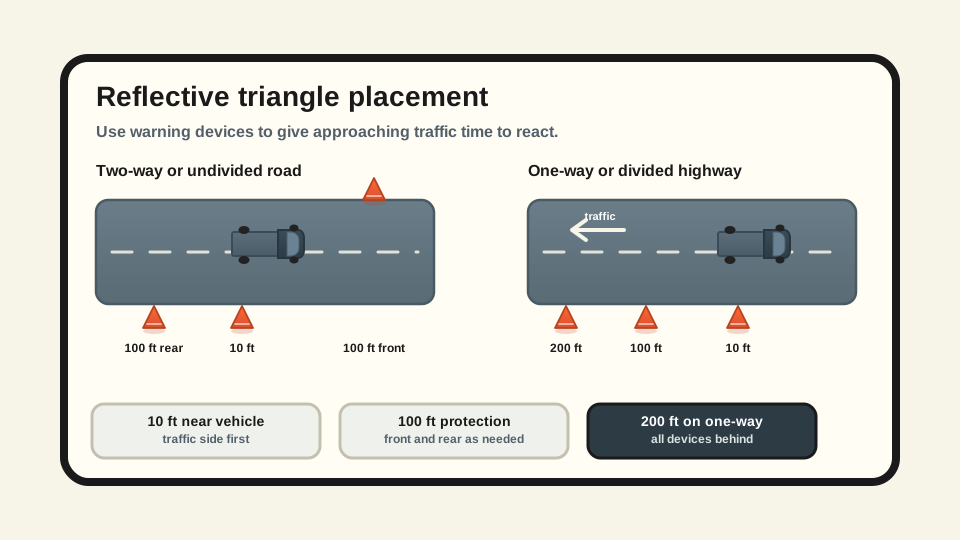
What must you do when placing warning devices (triangles) on a two-lane road with traffic in both directions?
Warning-device placement depends on road type and traffic direction.
On a two-lane road carrying traffic in both directions, place warning devices within 10 feet of the front or rear corners, about 100 feet behind, and about 100 feet ahead of the vehicle.
Study focusRespond safely to hazards, emergencies, traction loss, and unsafe conditions.
Common trapReacting late or using sudden braking/steering when controlled action is safer.
Question 4
If you must pull over to the shoulder on a highway, how quickly must you place your warning devices?
Federal regulations require that emergency warning devices (like reflective triangles) be placed within 10 minutes of stopping on the shoulder or traveled portion of the road.
Study focusRespond safely to hazards, emergencies, traction loss, and unsafe conditions.
Common trapReacting late or using sudden braking/steering when controlled action is safer.
Question 5
What should you do if your vehicle begins to hydroplane?
To recover from hydroplaning, release the accelerator and push in the clutch. Do not use the brakes, as this can cause the wheels to lock and result in a skid.
Study focusRespond safely to hazards, emergencies, traction loss, and unsafe conditions.
Common trapReacting late or using sudden braking/steering when controlled action is safer.
Question 6
What is black ice?
Black ice is a thin layer of clear ice. Because it is clear, you can see the dark asphalt underneath, making the road appear wet rather than icy.
Study focusRespond safely to hazards, emergencies, traction loss, and unsafe conditions.
Common trapReacting late or using sudden braking/steering when controlled action is safer.
Question 7
What is the primary danger of driving through deep puddles of water?
Driving through deep water can soak the brake linings. Wet brakes can be weak, apply unevenly, or grab, leading to a lack of braking power or a skid.
Study focusRespond safely to hazards, emergencies, traction loss, and unsafe conditions.
Common trapReacting late or using sudden braking/steering when controlled action is safer.
Question 8
What is the safest reason to use an escape ramp?
Escape ramps are emergency features for runaway or uncontrollable vehicles on grades. They are not routine stopping areas.