Study topic

CDL Air Brake Tests and Warnings

Study low air pressure warnings, leakage checks, spring brake tests, brake lag, and safe air-brake decisions.

Where this page fits

Air brakes: CDL Air Brake Tests and Warnings

This page is one checkpoint inside the CDL study guide. Use the map to move between the full outline, topic notes, practice questions, and focused weak-area review.

  • Identify whether the question is about warning, leakage, spring brake behavior, or brake lag.
  • Know whether the test describes a single vehicle or combination vehicle.
  • Treat wrong warning or leakage behavior as a safety problem before driving.

How to study air brake tests and warnings

Air brake tests and warning questions are detail-heavy because pressure behavior matters. Study the purpose of each test, not only the number.

  • Low air pressure warning signals
  • Static and applied leakage checks
  • Spring brake application tests
  • Brake lag and stopping distance
  • Safe response when pressure or warning behavior is wrong

How to study this topic

Warnings require action

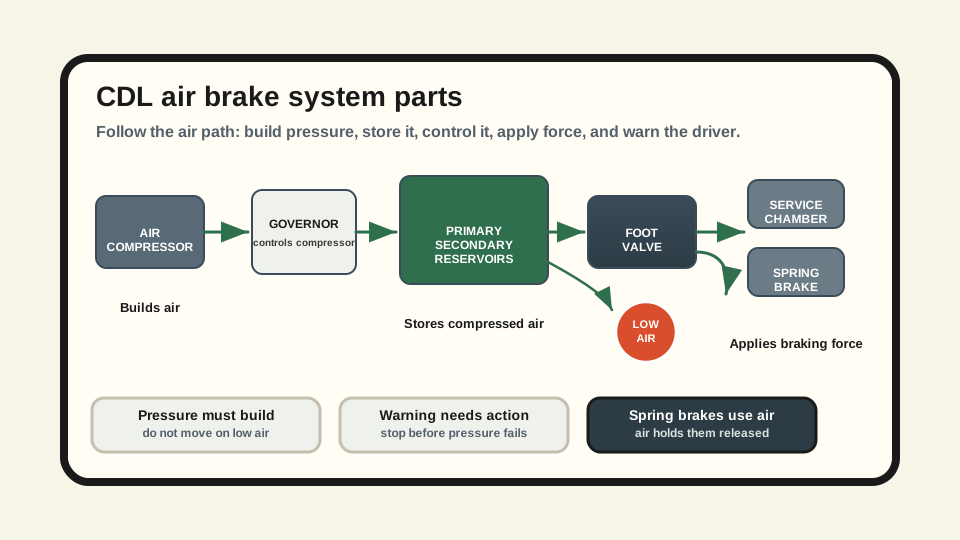
A low air warning is not a normal dashboard message. It means the driver should protect braking ability and choose a safe response.

Know which test is being asked

Before answering leakage questions, identify whether the question describes static leakage, applied leakage, or spring brake behavior.

Numbers need context

Pressure numbers are easier to remember when you connect them to a safety event: warning, leakage, brake lag, or spring brake application.

Practice questions

CDL Air Brake Tests and Warnings Quiz

Answered 0 / 14
Question 1

At what air pressure must the low air pressure warning signal come on?

Question 2

What are spring brakes?

Question 3

How do you test the static air leakage rate on a combination vehicle with air brakes?

Question 4

During an applied air leakage rate test, what is the maximum allowable pressure loss for a combination vehicle?

Question 5

When testing the low pressure warning signal, how should you reduce the air pressure?

Question 6

If the spring brakes apply while you are driving, what should you do?

Question 7

What color is the tractor parking brake control valve in the cab?

Question 8

When should you NOT use the parking brake?

Question 9

How do you manually check the slack adjusters on S-cam brakes?

Question 10

What is the maximum leakage rate for a straight truck or bus with the engine off and the brakes released?

Question 11

What is the purpose of the modulating control valve?

Question 12

What provides the braking power for spring brakes?

Question 13

If your vehicle has dual parking control valves, what can you use the separate air tank for?

Question 14

How do you check that the spring brakes come on automatically?

Keep practicing

Choose what to practice next.