Study basic vehicle control, backing awareness, shifting decisions, and safe control habits before skills practice.
Last updated:
Where this page fits
Core CDL knowledge: CDL Basic Control and Shifting
This page is one checkpoint inside the CDL study guide. Use the map to move between the full outline, topic notes, practice questions, and focused weak-area review.
Use slow, controlled movement before speed.
Stop and check when clearance, trailer position, or boundary location is unclear.
Basic control questions and skills-test habits both ask whether you can place the vehicle safely, use mirrors, control speed, and avoid continuing when visibility or position is uncertain.
Starting, stopping, steering, and lane position
Backing only when safe and stopping to check position
Shifting decisions that keep control on grades or in traffic
Pull-ups, corrections, and boundary awareness
Smooth control before speed or convenience
How to study this topic
Control is a safety habit
Basic control is not only a scored maneuver. It is the habit of placing a large vehicle where it belongs without surprise movement, blind backing, or last-second correction.
Stop when the picture is unclear
If you cannot confirm clearance, trailer position, traffic, or boundary location, the safer study answer is to stop, check, and continue only when the path is clear.
Shifting supports control
Shifting questions usually connect to grades, curves, traffic, or traction. Choose the gear and speed that keep the vehicle under control before the situation becomes urgent.
Practice questions
CDL Basic Control and Shifting Quiz
Answered 0 / 14
Question 1
During a basic control exercise, what should you do if you are not sure where the rear of the vehicle is?
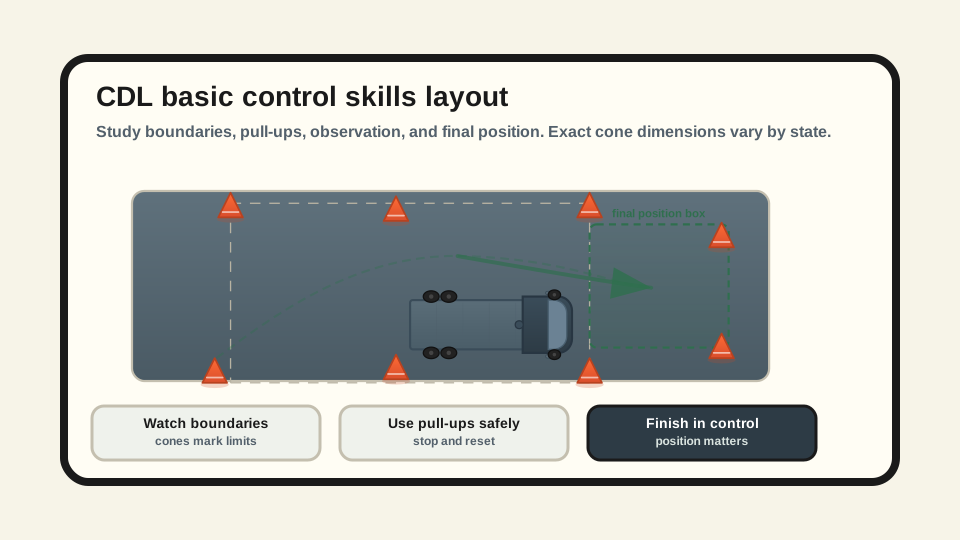
Cone layout and backing path
Basic control is about safe positioning. If the driver is unsure, stopping and checking the vehicle position is safer than continuing blindly.
Source focusCDL Manual - Basic Vehicle Control Skills Test
Study focusUse safe backing, turning, and basic-control habits.
Common trapBacking without a helper or failing to stop when visibility is uncertain.
Question 2
What does a pull-up show during a backing or control exercise?
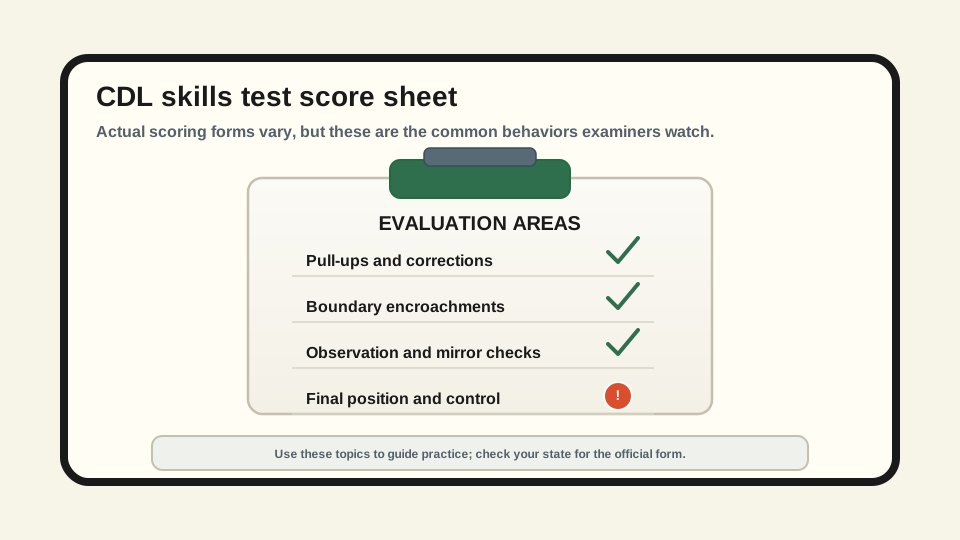
Score sheet concepts
A pull-up is a correction used to improve vehicle position during a basic control maneuver. It should be planned and controlled.
Source focusCDL Manual - Basic Vehicle Control Skills Test
Study focusUse safe backing, turning, and basic-control habits.
Common trapBacking without a helper or failing to stop when visibility is uncertain.
Question 3
Why are encroachments important during the basic control test?
Boundary control is part of the skills test. Crossing a line, cone boundary, or marked space can show poor vehicle control.
Source focusCDL Manual - Basic Vehicle Control Skills Test
Study focusUse safe backing, turning, and basic-control habits.
Common trapBacking without a helper or failing to stop when visibility is uncertain.
Question 4
When preparing for the on-road test, what should a driver do before changing lanes?
On-road testing looks for safe traffic checks, communication, and space management before a lane change.
Source focusCDL Manual - On-Road Driving Test
Study focusApply safe on-road habits for turns, intersections, lane changes, speed, and traffic checks.
Common trapTreating the road test as route memory instead of continuous observation, communication, and control.
Question 5
What is the safest habit before making a right turn with a large commercial vehicle?
Large vehicles need planned turns. The driver should watch the path of the rear wheels, mirrors, traffic, and pedestrians.
Study focusApply safe on-road habits for turns, intersections, lane changes, speed, and traffic checks.
Common trapTreating the road test as route memory instead of continuous observation, communication, and control.
Question 6
During an on-road test, why is speed management judged continuously?
Safe commercial driving depends on speed for conditions, not only speed limits. The examiner watches whether the driver adjusts to real road conditions.
Source focusCDL Manual - On-Road Driving Test: speed and traffic
Study focusApply safe on-road habits for turns, intersections, lane changes, speed, and traffic checks.
Common trapTreating the road test as route memory instead of continuous observation, communication, and control.
Question 7
What should a driver do at intersections during the on-road test?
Intersections test scanning, lane control, signs, signals, and safe gap judgment. Commercial vehicles need early observation and controlled movement.
Study focusApply safe on-road habits for turns, intersections, lane changes, speed, and traffic checks.
Common trapTreating the road test as route memory instead of continuous observation, communication, and control.
Question 9
What is a safe study approach for basic control skills?
The skills test checks real vehicle control. Slow practice, mirror use, stopping when uncertain, and boundary awareness build safer habits.
Source focusCDL Manual - Basic Vehicle Control Skills Test
Study focusUse safe backing, turning, and basic-control habits.
Common trapBacking without a helper or failing to stop when visibility is uncertain.
Question 10
What does good road-test communication include?
Communication is more than signals. Lane position, speed changes, brake timing, and mirror use all help other road users understand a large vehicle's movement.
Source focusCDL Manual - On-Road Driving Test: traffic communication
Study focusApply safe on-road habits for turns, intersections, lane changes, speed, and traffic checks.
Common trapTreating the road test as route memory instead of continuous observation, communication, and control.
Question 11
When backing a commercial vehicle, which of the following is the most important safety rule?
Because of blind spots, you cannot see everything behind you. Using a helper is the most important safety rule for backing. Always agree on a hand signal for 'stop' before you begin.
Study focusUse safe backing, turning, and basic-control habits.
Common trapBacking without a helper or failing to stop when visibility is uncertain.
Question 12
How far ahead should you be looking while driving a commercial vehicle at highway speeds?
Good drivers look 12 to 15 seconds ahead. At highway speeds, this is about a quarter of a mile. This gives you time to adjust speed or change lanes to avoid hazards.
Study focusChoose safe speed, spacing, and visual search habits for commercial vehicles.
Common trapDriving at passenger-car speeds without accounting for weight, space, weather, or grade.
Question 13
When is it appropriate to use your high beams?
Use high beams whenever you can to see further ahead, provided it is safe and legal. You must dim them when within 500 feet of an oncoming vehicle or when following another vehicle within 500 feet.
Study focusApply core CDL safe-driving rules to common road and vehicle situations.
Common trapMemorizing rules without applying them to driving scenarios.
Question 14
What is the recommended following distance for a heavy vehicle traveling at 55 mph in ideal conditions?
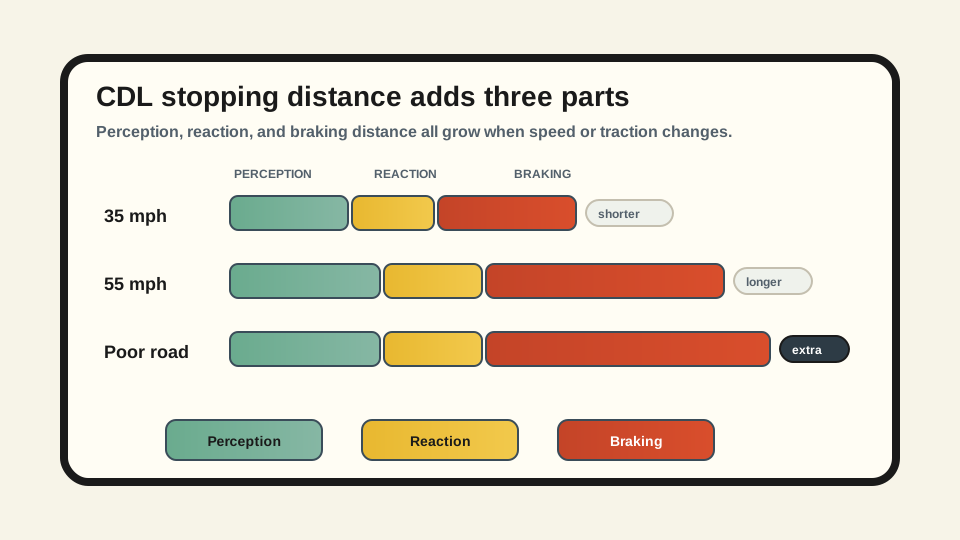
Stopping distance includes perception, reaction, and braking time.
The rule of thumb is 1 second of following distance for every 10 feet of vehicle length at speeds under 40 mph. For speeds over 40 mph, add 1 additional second. A 60-foot truck at 55 mph needs 7 seconds of space.
Study focusChoose safe speed, spacing, and visual search habits for commercial vehicles.
Common trapDriving at passenger-car speeds without accounting for weight, space, weather, or grade.