Study backing, pull-ups, encroachments, boundary control, mirror use, and safe corrections for the CDL basic control skills test.
Last updated:
Where this page fits
Skills test preparation: CDL Basic Vehicle Control Skills Test
This page is one checkpoint inside the CDL study guide. Use the map to move between the full outline, topic notes, practice questions, and focused weak-area review.
Review the skill being measured before trying to memorize a maneuver.
Practice the decision pattern: stop, check, correct, then continue.
Use official state material for exact testing expectations.
The basic control skills test is a physical driving test, but study still helps. Learn what the maneuvers are trying to measure: slow control, boundaries, backing judgment, corrections, and safe observation.
Backing and maneuver setup
Pull-ups, corrections, and stopping to check position
Encroachments and boundary awareness
Mirror use, trailer tracking, and steering control
Why slow, safe correction is better than rushed movement
How to study this topic
This is not just written knowledge
JSEA questions cannot replace behind-the-wheel practice. They help you understand why the skills test scores boundaries, position, pull-ups, and safe correction.
Use stop-and-check as a safety habit
If the vehicle position is unclear, continuing blindly is not a good habit. Stop, check, correct, then continue when it is safe.
Understand what each boundary means
A cone, line, or space boundary represents real-world clearance. Treat encroachments as a sign that mirror use, trailer path, or steering timing needs work.
Practice questions
CDL Basic Vehicle Control Skills Test Quiz
Answered 0 / 14
Question 1
During a basic control exercise, what should you do if you are not sure where the rear of the vehicle is?
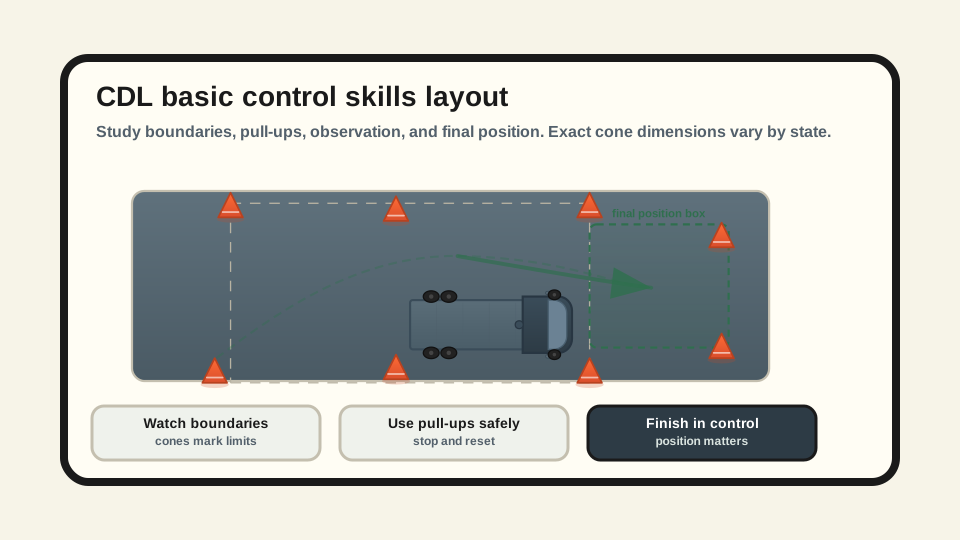
Cone layout and backing path
Basic control is about safe positioning. If the driver is unsure, stopping and checking the vehicle position is safer than continuing blindly.
Source focusCDL Manual - Basic Vehicle Control Skills Test
Study focusUse safe backing, turning, and basic-control habits.
Common trapBacking without a helper or failing to stop when visibility is uncertain.
Question 2
What does a pull-up show during a backing or control exercise?
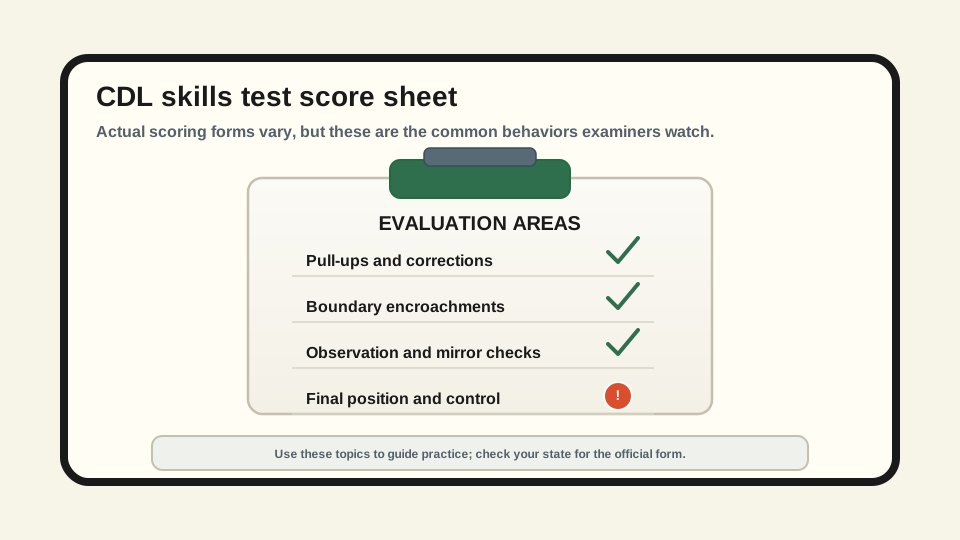
Score sheet concepts
A pull-up is a correction used to improve vehicle position during a basic control maneuver. It should be planned and controlled.
Source focusCDL Manual - Basic Vehicle Control Skills Test
Study focusUse safe backing, turning, and basic-control habits.
Common trapBacking without a helper or failing to stop when visibility is uncertain.
Question 3
Why are encroachments important during the basic control test?
Boundary control is part of the skills test. Crossing a line, cone boundary, or marked space can show poor vehicle control.
Source focusCDL Manual - Basic Vehicle Control Skills Test
Study focusUse safe backing, turning, and basic-control habits.
Common trapBacking without a helper or failing to stop when visibility is uncertain.
Question 4
When preparing for the on-road test, what should a driver do before changing lanes?
On-road testing looks for safe traffic checks, communication, and space management before a lane change.
Source focusCDL Manual - On-Road Driving Test
Study focusApply safe on-road habits for turns, intersections, lane changes, speed, and traffic checks.
Common trapTreating the road test as route memory instead of continuous observation, communication, and control.
Question 5
What is the safest habit before making a right turn with a large commercial vehicle?
Large vehicles need planned turns. The driver should watch the path of the rear wheels, mirrors, traffic, and pedestrians.
Study focusApply safe on-road habits for turns, intersections, lane changes, speed, and traffic checks.
Common trapTreating the road test as route memory instead of continuous observation, communication, and control.
Question 6
During an on-road test, why is speed management judged continuously?
Safe commercial driving depends on speed for conditions, not only speed limits. The examiner watches whether the driver adjusts to real road conditions.
Source focusCDL Manual - On-Road Driving Test: speed and traffic
Study focusApply safe on-road habits for turns, intersections, lane changes, speed, and traffic checks.
Common trapTreating the road test as route memory instead of continuous observation, communication, and control.
Question 7
What should a driver do at intersections during the on-road test?
Intersections test scanning, lane control, signs, signals, and safe gap judgment. Commercial vehicles need early observation and controlled movement.
Study focusApply safe on-road habits for turns, intersections, lane changes, speed, and traffic checks.
Common trapTreating the road test as route memory instead of continuous observation, communication, and control.
Question 9
What is a safe study approach for basic control skills?
The skills test checks real vehicle control. Slow practice, mirror use, stopping when uncertain, and boundary awareness build safer habits.
Source focusCDL Manual - Basic Vehicle Control Skills Test
Study focusUse safe backing, turning, and basic-control habits.
Common trapBacking without a helper or failing to stop when visibility is uncertain.
Question 10
What does good road-test communication include?
Communication is more than signals. Lane position, speed changes, brake timing, and mirror use all help other road users understand a large vehicle's movement.
Source focusCDL Manual - On-Road Driving Test: traffic communication
Study focusApply safe on-road habits for turns, intersections, lane changes, speed, and traffic checks.
Common trapTreating the road test as route memory instead of continuous observation, communication, and control.
Question 11
A mirror is loose and will not stay adjusted. Why is this unsafe?
Mirrors are essential for scanning, lane changes, turns, and backing. A loose mirror can leave the driver without reliable visibility.
Source focusFMCSA CDL Manual - Vehicle Inspection: mirrors and visibility
A loose mirror does not usually prevent starting.
Air compressor behavior is unrelated.
Tire pressure is unrelated.
Study focusRecognize mirror defects that affect safe driving.
Common trapTreating mirror movement as a comfort issue instead of a visibility issue.
Question 12
A windshield wiper blade is missing before a trip that may include rain. What is the safest decision?
Wipers support visibility when weather changes. A missing blade can make driving unsafe in rain or spray.
Source focusFMCSA CDL Manual - Vehicle Inspection: windshield and wipers
Study focusIdentify visibility equipment defects before driving.
Common trapJudging visibility only by current weather at the yard.
Question 13
What is the concern with a cracked windshield in the driver's view?
Windshield condition matters because the driver must see clearly. Cracks in the driver's view can become a safety issue.