Question 1
What is the main purpose of a CDL pre-trip inspection? To find defects that could make the vehicle unsafe before it is driven. To make the vehicle look clean for customers. To replace all maintenance records. To let the driver skip checks during the trip.
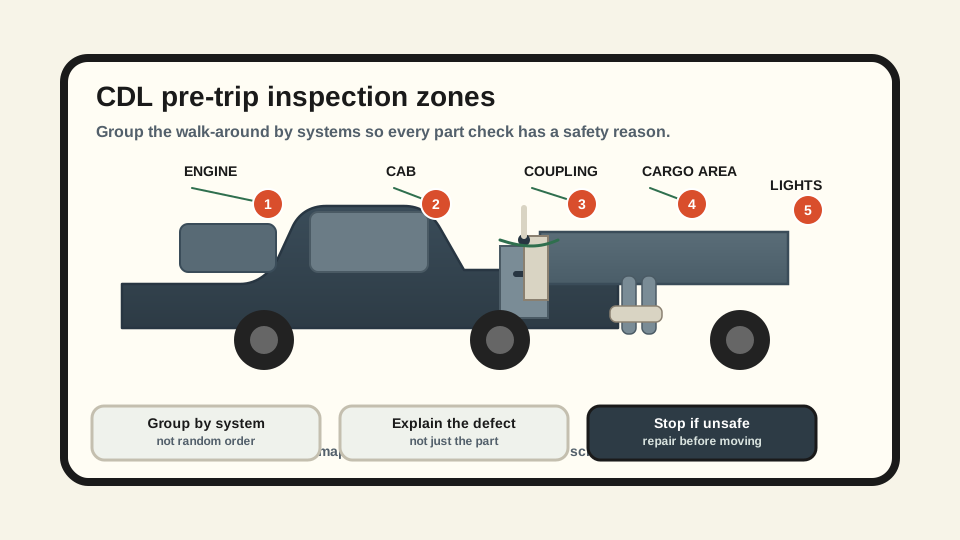
A pre-trip inspection is a safety check. The driver looks for defects before driving so unsafe conditions can be corrected.
Source focus FMCSA CDL Manual - Vehicle Inspection: pre-trip inspection purpose
Cleanliness is not the main purpose of the safety inspection.
Inspection does not replace maintenance records.
Drivers still need to monitor the vehicle during the trip.
Study focus Understand the safety purpose of a CDL pre-trip inspection.
Common trap Treating the inspection as a memorized routine rather than a safety decision.
Question 2
During a pre-trip inspection, you find a steering component that is loose. What should you do? Treat it as a serious safety defect and have it corrected before driving. Drive slowly to the first fuel stop. Ignore it if the steering wheel still turns. Tie it temporarily with a strap and start the route.
Loose steering parts can cause loss of control. A serious steering defect should be corrected before the vehicle is operated.
Source focus FMCSA CDL Manual - Vehicle Inspection: steering system
Driving slowly does not fix a steering safety defect.
A steering wheel can turn even when a component is unsafe.
Temporary straps are not proper repairs for steering defects.
Study focus Respond safely to steering defects found before a trip.
Common trap Assuming the vehicle is safe because the steering still moves.
Question 3
Which tire condition should make a CDL driver stop and address the problem before driving? A tire with exposed fabric or cord. A tire that is clean. A tire with a visible brand name. A tire that was checked yesterday.
Exposed fabric or cord indicates dangerous tire damage. The tire should not be treated as safe for operation.
Source focus FMCSA CDL Manual - Vehicle Inspection: tires and wheels
A clean tire can still be defective.
Brand visibility is not a safety defect.
Yesterday's check does not replace today's inspection.
Study focus Identify dangerous tire defects during inspection.
Common trap Checking tire pressure but missing visible structural damage.
Question 4
You see fresh fluid dripping under the engine area during inspection. What is the best next step? Identify and correct the leak before deciding the vehicle is safe. Assume it is water and begin the trip. Park over gravel so the leak is less visible. Drive until a warning light appears.
Fresh fluid can indicate a leak in an important system. The driver should identify the source and correct unsafe conditions before driving.
Source focus FMCSA CDL Manual - Vehicle Inspection: leaks and engine compartment
Assuming the leak is harmless can miss a serious defect.
Hiding a leak does not make the vehicle safe.
A driver should not wait for a warning light when a visible issue is present.
Study focus Respond correctly to visible leaks found during inspection.
Common trap Waiting for a dashboard warning instead of investigating visible evidence.
Question 5
What should you check when inspecting belts and hoses? Cracks, frays, leaks, looseness, and secure connections. Whether every hose is the same color. Whether belts are hidden behind covers. Only whether the engine starts.
Belts and hoses should be checked for condition and secure attachment because failures can affect safe operation.
Source focus FMCSA CDL Manual - Vehicle Inspection: engine compartment
Color does not determine safe condition.
Being hidden does not confirm condition.
An engine can start even when belts or hoses are unsafe.
Study focus Inspect belts and hoses for visible safety defects.
Common trap Starting the engine without checking visible wear or leaks.
Question 6
When inspecting lights and reflectors, what are you trying to confirm? They are clean, working, the correct color, and not broken or missing. They match the driver's preferred style. They are only visible from the front. They can be skipped during daylight.
Lights and reflectors help other road users see the vehicle and understand its movement. They should be working, visible, and correct.
Source focus FMCSA CDL Manual - Vehicle Inspection: lights and reflectors
Style is not the safety standard.
Commercial vehicles need visibility from multiple directions.
Daylight does not remove the need for working lights and reflectors.
Study focus Inspect lighting and reflectors for visibility and safe communication.
Common trap Thinking lights only matter at night.
Question 7
A brake hose is worn and rubbing against another part. Why is this a serious inspection finding? The hose could fail and reduce braking safety. It makes the vehicle harder to wash. It only matters if the vehicle is empty. It proves the brakes are stronger than normal.
A damaged or rubbing brake hose can fail. Brake defects are serious because they affect stopping ability.
Source focus FMCSA CDL Manual - Vehicle Inspection: brake system checks
Cleaning is not the safety issue.
Brake defects matter whether the vehicle is empty or loaded.
Wear does not indicate stronger brakes.
Study focus Recognize brake hose defects that can affect safe operation.
Common trap Not connecting hose wear with braking failure risk.
Question 8
Why should wheel fasteners be checked during a pre-trip inspection? Loose, missing, or damaged fasteners can lead to wheel separation or unsafe operation. They show which company owns the vehicle. They control the radio antenna. They only matter after a tire has blown out.
Wheel fasteners help secure the wheel. Missing, loose, or damaged fasteners can create a major safety hazard.
Source focus FMCSA CDL Manual - Vehicle Inspection: wheels and rims
Ownership is unrelated to wheel fastener safety.
Fasteners do not control the radio.
Fasteners should be checked before a failure occurs.
Study focus Understand why wheel fastener condition matters.
Common trap Looking at tire tread while ignoring wheel attachment hardware.
Question 9
In a combination vehicle pre-trip inspection, what coupling item should be confirmed before moving? The fifth wheel jaws are locked around the kingpin. The trailer doors are painted the same color as the tractor. The landing gear crank handle is decorative. The trailer is close enough even if not locked.
The coupling must be secure before movement. Locked fifth wheel jaws around the kingpin are a critical coupling check.
Source focus FMCSA CDL Manual - Combination Vehicles: coupling inspection
Paint color has no safety value for coupling.
Landing gear parts are functional, not decorative.
A trailer must be properly locked, not merely close.
Study focus Confirm safe fifth wheel and kingpin coupling before operating a combination vehicle.
Common trap Assuming the trailer is connected because it appears close to the tractor.
Question 10
What should the driver do if an inspection finds a defect that makes the vehicle unsafe? Do not drive until the defect is corrected. Drive only on back roads. Ask another driver to sign the report without checking. Ignore it if the route is familiar.
An unsafe defect should be corrected before operation. Familiar roads or light traffic do not make an unsafe vehicle safe.
Source focus FMCSA CDL Manual - Vehicle Inspection: defect reporting and safe operation
Back roads do not correct an unsafe defect.
A signature does not make a vehicle safe.
Familiarity with the route does not remove the hazard.
Study focus Choose the correct decision after finding an unsafe vehicle defect.
Common trap Trying to manage an unsafe defect by changing the route instead of fixing the problem.
Question 11
Why should cargo securement be considered during a pre-trip inspection? Loose or shifting cargo can affect vehicle control and create road hazards. It determines the driver's music volume. It replaces the need to check brakes. It only matters after the vehicle reaches highway speed.
Cargo securement affects safety before the trip starts. Shifting or falling cargo can change vehicle handling and endanger others.
Source focus FMCSA CDL Manual - Vehicle Inspection and Cargo: securement checks
Music volume is unrelated to cargo safety.
Cargo checks do not replace brake checks.
Cargo must be safe before the vehicle starts moving.
Study focus Connect cargo securement checks with pre-trip vehicle safety.
Common trap Treating cargo as separate from vehicle safety inspection.
Question 12
During the walk-around, you find a cracked suspension part. What is the safe interpretation? It may affect vehicle control or load support and should be corrected before driving. It is safe if the road is smooth. It is only a problem on passenger vehicles. It can be ignored if the cargo is light.
Suspension defects can affect control, stability, and load support. A cracked part should be treated as a serious safety concern.
Source focus FMCSA CDL Manual - Vehicle Inspection: suspension system
Smooth roads do not make a cracked suspension part safe.
Suspension safety matters on commercial vehicles generally.
Light cargo does not remove the risk of a cracked component.
Study focus Identify suspension defects that can make a vehicle unsafe.
Common trap Assuming a visible crack is acceptable if the vehicle still sits level.
Question 13
During a pre-trip inspection, you find a steering component that is loose or cracked. What is the safest decision? Do not drive until the defect is corrected. Drive slowly and recheck it at the next fuel stop. Ignore it if the steering wheel still turns. Tighten the steering wheel cover.
Steering defects can cause loss of control. A loose or cracked steering component should be corrected before the vehicle is operated.
Source focus FMCSA CDL Manual - Vehicle Inspection: steering system
Waiting until a fuel stop keeps an unsafe steering defect on the road.
A working steering wheel does not mean all steering parts are safe.
A steering wheel cover does not repair the steering system.
Study focus Identify steering defects that make a vehicle unsafe before driving.
Common trap Assuming the vehicle is safe because it still turns in the lot.
Question 14
What does a deep cut or exposed cord in a tire sidewall usually mean during inspection? The tire is unsafe and should be corrected before driving. The tire is acceptable if it holds air. The tire only needs more air pressure. The tire will become safer after it warms up.
A damaged sidewall or exposed cord can lead to tire failure. It is not a cosmetic issue.
Source focus FMCSA CDL Manual - Vehicle Inspection: tires and wheels
Holding air at the moment does not make serious tire damage safe.
Air pressure does not repair exposed cord or sidewall damage.
Heat can make tire damage more dangerous, not safer.
Study focus Recognize unsafe tire damage during pre-trip inspection.
Common trap Checking only air pressure while missing visible tire damage.
Question 15
You see fresh fluid under the engine area before a trip. What should you do? Identify the leak and correct unsafe conditions before driving. Drive first to see if the leak stops. Cover the spot with dirt and continue. Assume all leaks are air conditioning water.
Leaks can indicate unsafe engine, fuel, coolant, steering, or brake problems. The driver should identify and address unsafe leaks before moving.
Source focus FMCSA CDL Manual - Vehicle Inspection: leaks and engine area
Driving can make an unsafe leak worse.
Covering the leak hides evidence and does not fix it.
Not all leaks are harmless condensation.
Study focus Respond safely to visible leaks before driving.
Common trap Treating an unknown leak as harmless without checking it.
Question 16
A brake hose is rubbing against another part and shows visible wear. Why is this serious? The hose could fail and reduce braking ability. It will make the horn louder. It only affects fuel mileage. It means the headlights are aimed too high.
Brake hoses carry pressure or air needed for braking. Wear, rubbing, or damage can lead to brake failure.
Source focus FMCSA CDL Manual - Vehicle Inspection: brake lines and hoses
Brake hose damage does not affect the horn.
Fuel mileage is not the safety issue.
Headlight aim is unrelated.
Study focus Recognize brake-line and hose defects during inspection.
Common trap Missing worn hoses because they are not as obvious as a flat tire.
Question 17
During inspection, what is the concern with cracked or missing leaf springs? They can affect vehicle support, handling, and control. They only make the ride less comfortable. They make the fuel tank smaller. They only matter when the truck is empty.
Suspension defects can affect load support and vehicle control. Cracked or missing parts should not be ignored.
Source focus FMCSA CDL Manual - Vehicle Inspection: suspension
Suspension affects safety, not only comfort.
Suspension damage does not change fuel tank capacity.
Suspension defects matter whether loaded or empty.
Study focus Identify unsafe suspension defects.
Common trap Treating suspension damage as comfort-only.
Question 18
What should you check on wheels and rims before driving? Cracks, missing parts, loose fasteners, damage, and signs of unsafe condition. Only whether the rims are clean. Only the paint color. Only whether the tires are new.
Wheel and rim defects can lead to wheel failure or loss. Inspection should focus on condition and securement, not appearance.
Source focus FMCSA CDL Manual - Vehicle Inspection: wheels and rims
Clean rims can still be damaged.
Paint color is not a safety check.
New tires do not prove wheels and rims are safe.
Study focus Know what to inspect on wheels and rims.
Common trap Looking at appearance instead of structural condition.
Question 19
Why are lights and reflectors part of the pre-trip inspection? They help other road users see your vehicle and understand your signals. They make the vehicle easier to wash. They reduce engine temperature. They replace mirror checks.
Lights and reflectors support visibility, communication, and safe movement around other road users.
Source focus FMCSA CDL Manual - Vehicle Inspection: lights and reflectors
Washing is unrelated to safety inspection.
Lights do not cool the engine.
Lights do not replace mirror checks.
Study focus Connect light and reflector checks to road safety.
Common trap Checking lights only to avoid a ticket rather than to communicate on the road.
Question 20
A belt in the engine compartment is badly frayed. What is the best inspection decision? Have the defect corrected before it causes a system failure. Spray it with water and continue. Drive until the belt breaks. Turn off the dashboard warning light.
Belts help run important systems. A badly frayed belt can fail during the trip and create a breakdown or safety issue.
Source focus FMCSA CDL Manual - Vehicle Inspection: engine compartment
Water does not repair a frayed belt.
Waiting for failure creates preventable risk.
Turning off a warning light does not repair the system.
Study focus Identify belt damage that should be corrected before driving.
Common trap Waiting for a warning light instead of acting on a visible defect.
Question 21
When inspecting a combination vehicle, why must the fifth wheel locking jaws be checked? To confirm the trailer is securely coupled to the tractor. To adjust the radio antenna. To drain water from the fuel tank. To measure tire tread depth.
The locking jaws secure the kingpin. If the coupling is not locked, the trailer can separate or drop.
Source focus FMCSA CDL Manual - Combination Vehicles: coupling inspection
The fifth wheel is unrelated to the antenna.
Fuel tank drainage is a different inspection area.
Tread depth is checked at the tires.
Study focus Inspect fifth wheel locking jaws for secure coupling.
Common trap Assuming the trailer is secure without a visual coupling check.
Question 22
What should be verified about cargo before driving? Cargo is secure enough that it will not shift, fall, leak, or create unsafe handling. Cargo is arranged by color. Cargo is loaded only on the left side. Cargo paperwork is hidden from inspectors.
Cargo securement protects the driver, the vehicle, and other road users. Shifting or falling cargo can cause loss of control or roadway hazards.
Source focus FMCSA CDL Manual - Transporting Cargo Safely: securement
Color arrangement is not a safety requirement.
Loading balance and securement matter; one-side loading is not a safety goal.
Hiding paperwork is unsafe and improper.
Study focus Connect cargo inspection to safe vehicle handling.
Common trap Treating cargo as the shipper's problem after loading.
Question 23
Why should the driver confirm emergency equipment is present before a trip? It may be needed during a breakdown, fire, or roadside emergency. It increases the legal payload. It keeps the engine from overheating. It lets the driver skip inspections.
Emergency equipment supports safe response when the vehicle is stopped, disabled, or involved in a hazard.
Source focus FMCSA CDL Manual - Vehicle Inspection: emergency equipment
Emergency equipment does not increase payload.
It does not cool the engine.
It does not replace vehicle inspection.
Study focus Understand the purpose of emergency equipment checks.
Common trap Thinking emergency equipment matters only after a roadside inspection.
Question 24
A mirror is loose and will not stay adjusted. Why is this unsafe? The driver may lose awareness of traffic, trailer position, and blind areas. The truck will not start. The air compressor will cut out too soon. The tires will overinflate.
Mirrors are essential for scanning, lane changes, turns, and backing. A loose mirror can leave the driver without reliable visibility.
Source focus FMCSA CDL Manual - Vehicle Inspection: mirrors and visibility
A loose mirror does not usually prevent starting.
Air compressor behavior is unrelated.
Tire pressure is unrelated.
Study focus Recognize mirror defects that affect safe driving.
Common trap Treating mirror movement as a comfort issue instead of a visibility issue.
Question 25
What should a driver do after finding a defect that makes the vehicle unsafe? Have the defect corrected before operating the vehicle. Drive only during daylight. Write it down but continue the trip. Ask another driver to follow closely.
The point of inspection is to find unsafe defects before they become crashes or breakdowns. Unsafe defects should be corrected before driving.
Source focus FMCSA CDL Manual - Vehicle Inspection: defect decisions
Daylight does not fix an unsafe defect.
Documentation alone does not make the vehicle safe.
Another driver following does not control the defect.
Study focus Choose the correct decision after finding an unsafe defect.
Common trap Documenting a serious defect without correcting it before movement.
Question 26
During an engine-compartment inspection, why should you check coolant hoses? A cracked, leaking, or loose hose can lead to overheating or breakdown. Hoses set the legal vehicle length. Coolant hoses control the stop arm. Hoses replace the need to check tires.
Coolant hoses are part of the engine support system. A damaged hose can create a leak, overheating, and unsafe roadside failure.
Source focus FMCSA CDL Manual - Vehicle Inspection: engine compartment
Study focus Inspect coolant hoses for defects before driving.
Common trap Checking fluid level while missing the hose condition that may cause fluid loss.
Question 27
What should you look for when inspecting the exhaust system? Loose, broken, or leaking parts that could create fire or fumes hazards. Only whether the exhaust pipe is shiny. Whether the radio antenna is attached to it. Whether it holds extra cargo.
A damaged exhaust system can leak fumes, create heat hazards, or indicate loose parts under the vehicle.
Source focus FMCSA CDL Manual - Vehicle Inspection: exhaust system
Study focus Identify unsafe exhaust system defects.
Common trap Ignoring exhaust problems because the engine still runs.
Question 28
Why should frame members be checked during a pre-trip inspection? Cracks, bends, or loose parts can affect vehicle strength and control. They determine the color of the cab. They replace suspension checks. They are checked only for cleanliness.
The frame supports the vehicle and load. Structural defects can be serious safety problems.
Source focus FMCSA CDL Manual - Vehicle Inspection: frame
Study focus Recognize unsafe frame defects before driving.
Common trap Checking only visible tires and lights while missing structural damage.
Question 29
A windshield wiper blade is missing before a trip that may include rain. What is the safest decision? Have it corrected before driving because visibility may be unsafe. Drive only by watching the side mirror. Use the horn more often. Ignore it if the windshield is clean at departure.
Wipers support visibility when weather changes. A missing blade can make driving unsafe in rain or spray.
Source focus FMCSA CDL Manual - Vehicle Inspection: windshield and wipers
Study focus Identify visibility equipment defects before driving.
Common trap Judging visibility only by current weather at the yard.
Question 30
What is the concern with a cracked windshield in the driver's view? It can interfere with visibility and may worsen during the trip. It makes the air compressor run faster. It lowers axle weight automatically. It is only a cosmetic issue.
Windshield condition matters because the driver must see clearly. Cracks in the driver's view can become a safety issue.
Source focus FMCSA CDL Manual - Vehicle Inspection: windshield
Study focus Evaluate windshield defects for visibility risk.
Common trap Treating windshield cracks as cosmetic when they affect visibility.
Question 31
When inspecting a tractor-trailer, what should you check about air and electrical lines? They are connected, secure, not damaged, and not dragging or rubbing. They are painted the same color. They are tied around the landing gear crank. They are disconnected before driving.
Air and electrical lines support trailer brakes and lights. Damage, disconnection, or dragging can create serious safety defects.
Source focus FMCSA CDL Manual - Combination Vehicles: air and electrical lines
Study focus Inspect trailer air and electrical lines before movement.
Common trap Checking that lines are present without checking routing and damage.
Question 32
What should the fifth wheel release handle show during inspection after coupling? It is in the locked position and the coupling is secure. It is pulled open for easier turning. It is tied with rope instead of locked. It is removed from the vehicle.
The fifth wheel release handle should indicate the coupling is locked. The driver should verify coupling security before driving.
Source focus FMCSA CDL Manual - Combination Vehicles: coupling inspection
Study focus Inspect fifth wheel locking condition after coupling.
Common trap Relying on the sound of coupling without visual checks.
Question 33
Why should trailer landing gear be checked after coupling? It should be fully raised and secured so it does not strike the road. It should be left halfway down for balance. It replaces the fifth wheel lock. It controls the trailer brakes.
Landing gear left down or unsecured can strike the road or be damaged. It should be raised and secured before movement.
Source focus FMCSA CDL Manual - Combination Vehicles: landing gear
Study focus Inspect landing gear before moving a coupled trailer.
Common trap Finishing coupling checks before verifying landing gear position.
Question 34
During tire inspection, why should you check for mismatched tire sizes on the same axle? Mismatched tires can affect handling, load sharing, and tire safety. It makes the horn quieter. It improves braking automatically. It is required only on buses.
Tires on the same axle should be suitable and compatible. Mismatches can create uneven handling or loading problems.
Source focus FMCSA CDL Manual - Vehicle Inspection: tires
Study focus Recognize tire matching concerns during inspection.
Common trap Checking tread but ignoring whether tires are compatible.
Question 35
What should be checked on lug nuts during a wheel inspection? Missing, loose, damaged, or rust-streaked fasteners that may indicate looseness. Only whether they are painted. Only whether the hubcap covers them. Whether they are warm to the touch before driving.
Wheel fasteners must secure the wheel. Missing or loose lug nuts can lead to wheel separation.
Source focus FMCSA CDL Manual - Vehicle Inspection: wheels and rims
Study focus Inspect wheel fasteners for signs of unsafe looseness.
Common trap Looking at the tire but not the fasteners holding the wheel.
Question 36
Why is hub oil or axle seal leakage a pre-trip concern? It can indicate wheel-end problems that may lead to failure or fire risk. It improves tire traction. It shows the lights are working. It is only a cosmetic stain.
Oil or grease leaks around wheel ends can indicate failing seals or lubrication problems. Those defects can become serious on the road.
Source focus FMCSA CDL Manual - Vehicle Inspection: wheels and hubs
Study focus Identify wheel-end leakage as an unsafe inspection finding.
Common trap Ignoring wheel-end leaks because the tire still holds air.
Question 37
What should a driver check about brake drums or rotors when visible? Cracks, damage, or conditions that could reduce braking safety. Only whether they are painted black. Whether they are used to hold cargo. Whether they replace air tanks.
Brake drums, rotors, linings, and related parts are safety-critical. Visible cracks or damage should not be ignored.
Source focus FMCSA CDL Manual - Vehicle Inspection: brake system
Study focus Inspect visible brake parts for safety defects.
Common trap Checking brake hoses but ignoring visible foundation brake defects.
Question 38
What is the safest response if the service brake pedal feels abnormal during a brake check? Do not operate the vehicle until the brake problem is identified and corrected. Drive at night when traffic is lighter. Use only the parking brake on the road. Pump the pedal once and ignore the issue.
Brake checks are intended to catch unsafe braking problems before driving. Abnormal service brake behavior should be corrected.
Source focus FMCSA CDL Manual - Vehicle Inspection: brake checks
Study focus Respond safely to abnormal brake-check results.
Common trap Trying to compensate for brake defects with driving style.
Question 39
Why should steering wheel play be checked before driving? Excessive play can indicate steering defects and reduce control. It determines fuel level. It makes the wipers faster. It only affects seat comfort.
Too much steering play can signal a steering system problem. Steering defects directly affect control of the vehicle.
Source focus FMCSA CDL Manual - Vehicle Inspection: steering
Study focus Recognize unsafe steering play during inspection.
Common trap Thinking steering play is normal because the vehicle can still move.
Question 40
What should be checked on suspension hangers and mounts? Cracks, missing parts, looseness, or damage that could affect support and control. Only whether they are clean. Whether they control the radio. Whether they replace the tires.
Suspension mounting parts help support the vehicle and load. Damaged or loose parts can create handling and safety problems.
Source focus FMCSA CDL Manual - Vehicle Inspection: suspension
Study focus Inspect suspension mounting parts for unsafe defects.
Common trap Checking springs but not the parts that hold the suspension in place.
Question 41
Why should a driver inspect battery boxes and covers? Loose batteries or damaged covers can create electrical, fire, or securement hazards. They control tire tread depth. They replace the fuel tank cap. They are checked only for decoration.
Batteries and cables should be secure and protected. Loose or damaged battery components can create safety hazards.
Source focus FMCSA CDL Manual - Vehicle Inspection: battery box
Study focus Inspect battery securement and covers for safety.
Common trap Checking the engine starts but ignoring battery securement.
Question 42
What should be checked about fuel tank caps and fuel leaks? Caps are secure and there are no unsafe leaks from tanks or fuel lines. Caps are loose so pressure can escape. Leaks are acceptable if they are slow. Fuel leaks only matter after the trip.
Fuel leaks are fire and environmental hazards. Fuel tanks, lines, and caps should be secure before driving.
Source focus FMCSA CDL Manual - Vehicle Inspection: fuel tanks
Study focus Inspect fuel tanks and fuel leaks before operation.
Common trap Treating small fuel leaks as harmless because the vehicle still runs.
Question 43
Why should reflectors and reflective tape be checked along with lights? They help other road users see the vehicle when light is low or lights are viewed from an angle. They increase engine power. They replace brake checks. They are used only inside the cab.
Reflective devices improve vehicle visibility. Missing or damaged reflectors can make a large vehicle harder to see.
Source focus FMCSA CDL Manual - Vehicle Inspection: lights and reflectors
Study focus Inspect reflective devices for visibility and communication.
Common trap Checking bulbs but ignoring passive visibility equipment.
Question 44
What should a driver check about cargo doors or trailer doors before driving? They are closed, latched, and secured so they cannot open during travel. They are open for ventilation. They are held by cargo weight only. They are checked only after arriving.
Unsecured doors can open into traffic, damage cargo, or create roadway hazards. They should be latched and secure before movement.
Source focus FMCSA CDL Manual - Vehicle Inspection and Cargo: doors
Study focus Inspect cargo and trailer doors for secure movement.
Common trap Checking cargo but not the doors containing it.
Question 45
What is the purpose of checking the driver seat and seat belt before a trip? The driver must be positioned and restrained safely to control the vehicle. The seat belt controls tire pressure. Seat checks replace brake checks. The seat is checked only for comfort.
A secure seat and working seat belt help the driver maintain control and protection during normal driving and emergencies.
Source focus FMCSA CDL Manual - Vehicle Inspection: cab check
Study focus Inspect driver seating and restraint for safe control.
Common trap Treating the driver seat and belt as comfort items only.
Question 46
During a pre-trip inspection, what should the driver do with any defect report from the previous driver? Review it and confirm reported safety defects were corrected before operating. Throw it away if the vehicle starts. Sign it without reading. Use it only for route planning.
Previous defect reports can identify known problems. The driver should not operate with unresolved safety defects.
Source focus FMCSA CDL Manual - Vehicle Inspection: driver vehicle inspection report
Study focus Use prior defect reports during pre-trip inspection.
Common trap Starting a new trip without checking whether prior defects were fixed.
Question 47
Why should a driver inspect under the vehicle for hanging parts or leaks? Loose parts or leaks can create breakdown, fire, steering, braking, or roadway hazards. Hanging parts improve aerodynamics. Leaks prove the vehicle was recently washed. Under-vehicle checks are only for passenger cars.
A look under the vehicle can reveal leaks, loose parts, or damage that may not be visible from the cab.
Source focus FMCSA CDL Manual - Vehicle Inspection: walk-around inspection
Study focus Identify under-vehicle defects during inspection.
Common trap Inspecting only parts at eye level.
Question 48
What is the best study habit for pre-trip inspection questions? Connect each part to the safety problem it can create if defective. Memorize part names without knowing why they matter. Study only cosmetic defects. Skip inspection topics if you can drive the vehicle.
Pre-trip questions test whether the driver can recognize unsafe defects and make safe decisions, not just list parts.
Source focus FMCSA CDL Manual - Vehicle Inspection: inspection purpose
Study focus Study pre-trip inspection as safety reasoning, not rote naming.
Common trap Memorizing a walk-around script without understanding defect consequences.
Question 49
What should be true about required spare fuses if the vehicle uses them? The required spare fuses should be present and usable before the trip. They should be removed to avoid electrical problems. They replace warning triangles. They are needed only for tank vehicles.
Required emergency and support equipment should be present before driving. Spare fuses may be required depending on the vehicle.
Source focus FMCSA CDL Manual - Vehicle Inspection: emergency equipment
Study focus Check required support equipment during pre-trip inspection.
Common trap Checking only large emergency equipment and missing smaller required items.
Question 50
Why should the horn be checked during the cab inspection? It is a communication device that may be needed to warn others. It controls brake pressure. It replaces turn signals. It is used only after a crash.
The horn helps communicate warnings when needed. It is part of the driver's safety equipment.
Source focus FMCSA CDL Manual - Vehicle Inspection: cab check
Study focus Inspect cab communication equipment before driving.
Common trap Thinking cab checks are less important than exterior checks.