Study topic

CDL Visual Search and Mirrors

Study scanning, mirror checks, lane awareness, blind areas, and early hazard recognition for CDL practice.

Where this page fits

Core CDL knowledge: CDL Visual Search and Mirrors

This page is one checkpoint inside the CDL study guide. Use the map to move between the full outline, topic notes, practice questions, and focused weak-area review.

  • Look far enough ahead to find hazards before they become emergencies.
  • Use mirrors as a repeating scan, not a last-second lane-change check.
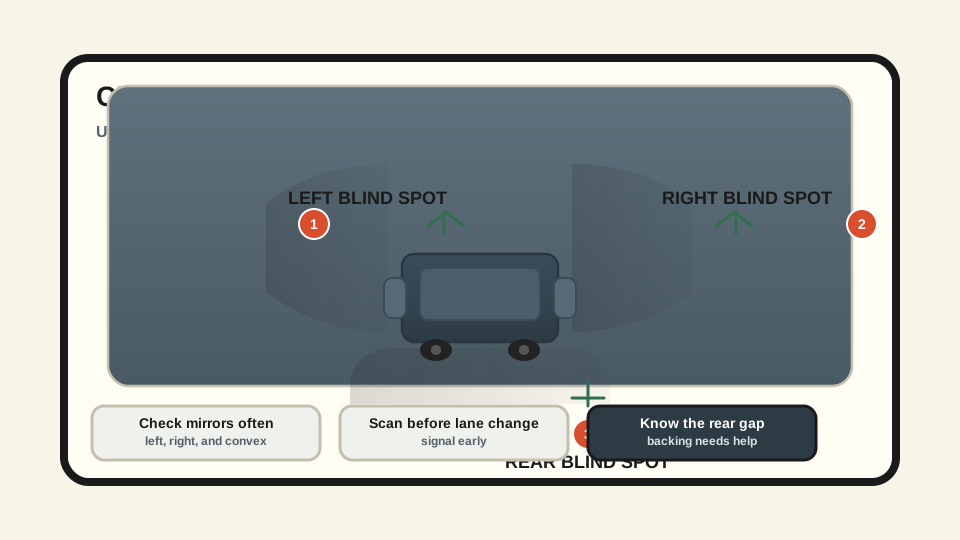
  • Watch blind areas during turns, backing, lane changes, and merging.

How to study visual search and mirror use

CDL visual-search questions test whether you can build awareness before a hazard is close. Mirrors, lane position, and long-range scanning all work together.

  • Looking far enough ahead for hazards
  • Checking mirrors as part of a regular scanning routine
  • Watching blind areas around a long vehicle
  • Planning lane changes and turns early
  • Using mirrors during backing, turns, and traffic changes

How to study this topic

Scanning is a rhythm

Do not wait for a problem to appear directly ahead. A CDL driver should keep updating what is happening in front, behind, and beside the vehicle.

Mirrors are safety equipment

A loose, blocked, or poorly adjusted mirror is an inspection issue because it limits lane, turn, and backing awareness.

Most wrong answers react too late

If an answer waits until the vehicle is already boxed in, close to a hazard, or blind to traffic, it is usually not the best CDL decision.

Practice questions

CDL Visual Search and Mirrors Quiz

Answered 0 / 14
Question 1

How far ahead should you be looking while driving a commercial vehicle at highway speeds?

Question 2

When is it appropriate to use your high beams?

Question 3

What is the recommended following distance for a heavy vehicle traveling at 55 mph in ideal conditions?

Question 4

What should you do if you are being tailgated?

Question 5

When approaching a curve, what is the best way to handle your speed?

Question 6

When driving a commercial vehicle, how should you adjust your speed for driving at night?

Question 7

What is the most important reason for inspecting your vehicle?

Question 8

When should you check your mirrors while driving?

Question 9

What is the primary cause of fatal crashes involving commercial vehicles?

Question 10

If you are driving a 60-foot truck at 50 mph, what is the minimum following distance you should maintain?

Question 11

What should you do if an aggressive driver is harassing you?

Question 12

What is the best way to use the brake pedal on a steep downgrade?

Question 13

How can you tell if the road is becoming slippery due to dropping temperatures?

Question 14

Why is it important to shift gears correctly?

Keep practicing

Choose what to practice next.