Study topic

CDL Night and Bad Weather Driving

Study night driving, rain, fog, ice, hydroplaning, wind, and low-visibility CDL decisions.

Where this page fits

Core CDL knowledge: CDL Night and Bad Weather Driving

This page is one checkpoint inside the CDL study guide. Use the map to move between the full outline, topic notes, practice questions, and focused weak-area review.

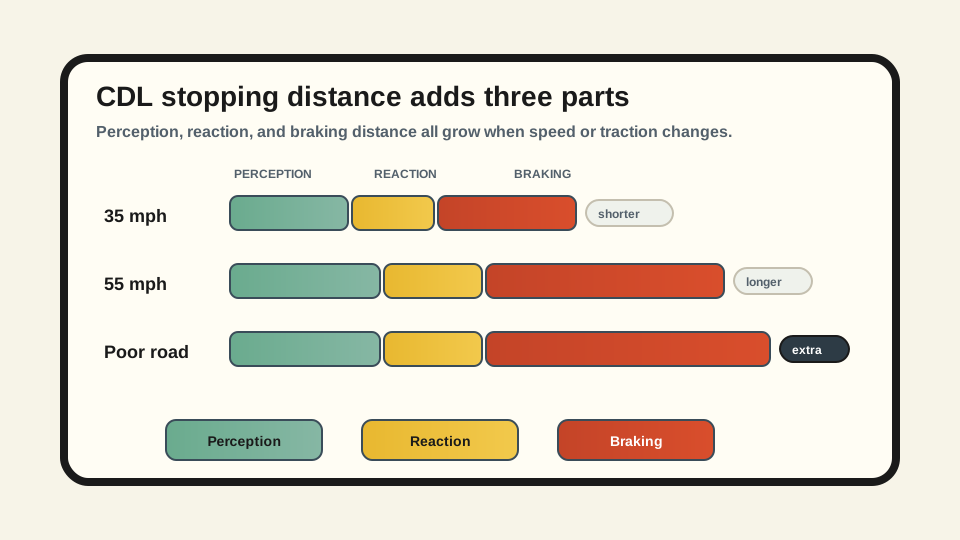
  • Match speed to the distance you can see and safely stop.
  • Add space when traction or visibility is reduced.
  • Avoid sudden braking or steering when the road surface is slick.

How to study night and weather questions

Night and weather questions test whether you adjust speed, visibility, following distance, and vehicle control before traction or sight distance becomes unsafe.

  • Headlight distance and stopping distance at night
  • Rain, fog, ice, black ice, and hydroplaning
  • Wind, standing water, and changing traction
  • Drying wet brakes and avoiding sudden control inputs
  • When conditions require a safe stop

How to study this topic

Visibility controls speed

At night or in fog, the safe speed is tied to how far you can see and stop, not only the speed limit.

Traction changes the answer

Wet, icy, or flooded surfaces make sudden braking and steering more dangerous. The safer answer usually keeps control and increases space.

Weather questions are scenario questions

Look for clues about headlights, road shine, spray, wind, water depth, tire heat, and following distance.

Practice questions

CDL Night and Bad Weather Driving Quiz

Answered 0 / 14
Question 1

How far ahead should you be looking while driving a commercial vehicle at highway speeds?

Question 2

When is it appropriate to use your high beams?

Question 3

Why should you avoid using the engine brake (Jake brake) on wet or icy roads?

Question 4

What is the recommended following distance for a heavy vehicle traveling at 55 mph in ideal conditions?

Question 5

Which of these is a sign of distracted driving?

Question 6

What should you do if you are being tailgated?

Question 7

When approaching a curve, what is the best way to handle your speed?

Question 8

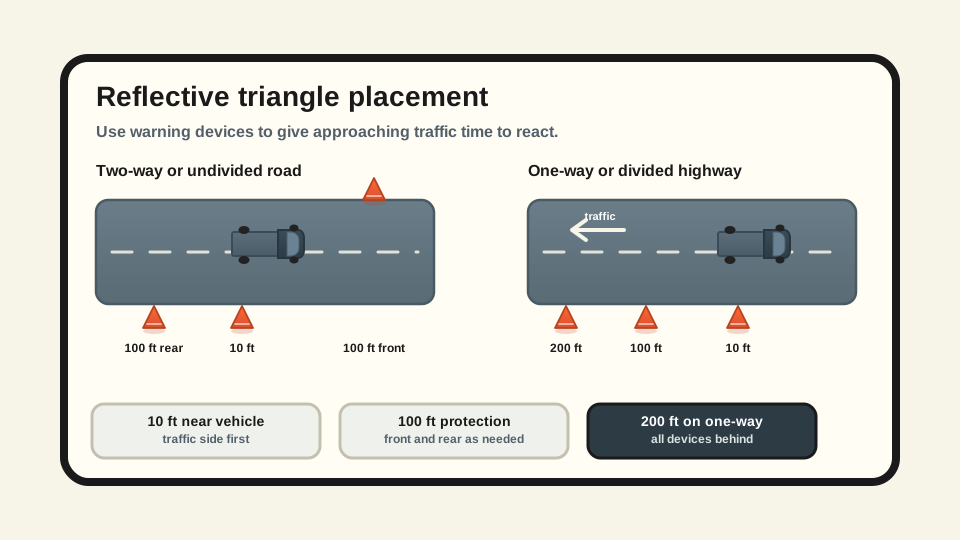
What must you do when placing warning devices (triangles) on a two-lane road with traffic in both directions?

Question 9

If you must pull over to the shoulder on a highway, how quickly must you place your warning devices?

Question 10

What should you do if your vehicle begins to hydroplane?

Question 11

What is black ice?

Question 12

When should you check your mirrors while driving?

Question 13

What is the primary cause of fatal crashes involving commercial vehicles?

Question 14

If you are driving a 60-foot truck at 50 mph, what is the minimum following distance you should maintain?

Keep practicing

Choose what to practice next.