Your score review found missed questions about pre-trip inspection systems, unsafe defects, or the decision to stop and correct a problem before driving.
Last updated:
Study the weak area
What to understand before you answer.
Pre-trip questions are about safety consequences. The goal is to know which defects make a vehicle unsafe, not just to memorize a walk-around order.
01
Connect every part check to a safety reason: control, stopping, visibility, support, or securement.
Do not wait for a warning light when a visible defect is already present.
04
If a defect makes the vehicle unsafe, the correct decision is to correct it before driving.
Before the questions
How to improve this score.
Read the pre-trip inspection study page.
Answer this drill by naming the safety consequence in each question.
Group misses by system: steering, tires, leaks, lights, brakes, wheels, or suspension.
Try a mixed CDL set after the system-level misses improve.
Common traps to watch for
Memorizing a walk-around order without understanding which defects make the vehicle unsafe.
When this pattern appears in a missed answer, review the explanation before trying another set.
Treating the inspection as a memorized routine rather than a safety decision.
When this pattern appears in a missed answer, review the explanation before trying another set.
Assuming the vehicle is safe because the steering still moves.
When this pattern appears in a missed answer, review the explanation before trying another set.
Checking tire pressure but missing visible structural damage.
When this pattern appears in a missed answer, review the explanation before trying another set.
Waiting for a dashboard warning instead of investigating visible evidence.
When this pattern appears in a missed answer, review the explanation before trying another set.
Practice questions
CDL Pre-Trip Systems Drill Quiz
Answered 0 / 20
Question 1
Before starting a CDL road trip, what should a driver do first?
A pre-trip inspection is the driver responsibility that confirms key systems are safe before operating the vehicle.
Study focusUse pre-trip inspection habits to identify unsafe vehicle-system defects before driving.
Common trapMemorizing a walk-around order without understanding which defects make the vehicle unsafe.
Question 2
What is the minimum tread depth required for the front steering tires of a commercial vehicle?
Federal regulations require a minimum tread depth of 4/32 inch in every major groove on front (steering) tires. Other tires require at least 2/32 inch.
Study focusUse pre-trip inspection habits to identify unsafe vehicle-system defects before driving.
Common trapMemorizing a walk-around order without understanding which defects make the vehicle unsafe.
Question 3
What is 'hydroplaning'?
Hydroplaning occurs when water builds up in front of your tires, causing them to lift off the road surface. You lose steering and braking control. To recover, release the accelerator and do not brake hard.
Study focusUse pre-trip inspection habits to identify unsafe vehicle-system defects before driving.
Common trapMemorizing a walk-around order without understanding which defects make the vehicle unsafe.
Question 4
If you experience a tire blowout while driving at highway speeds, what is the FIRST thing you should do?
When a tire blows out, grip the steering wheel firmly and stay off the brakes. Braking hard can cause a skid or loss of control. Let the vehicle slow down naturally before applying brakes gently.
Study focusUse pre-trip inspection habits to identify unsafe vehicle-system defects before driving.
Common trapMemorizing a walk-around order without understanding which defects make the vehicle unsafe.
Question 5
What is the purpose of a pre-trip inspection?
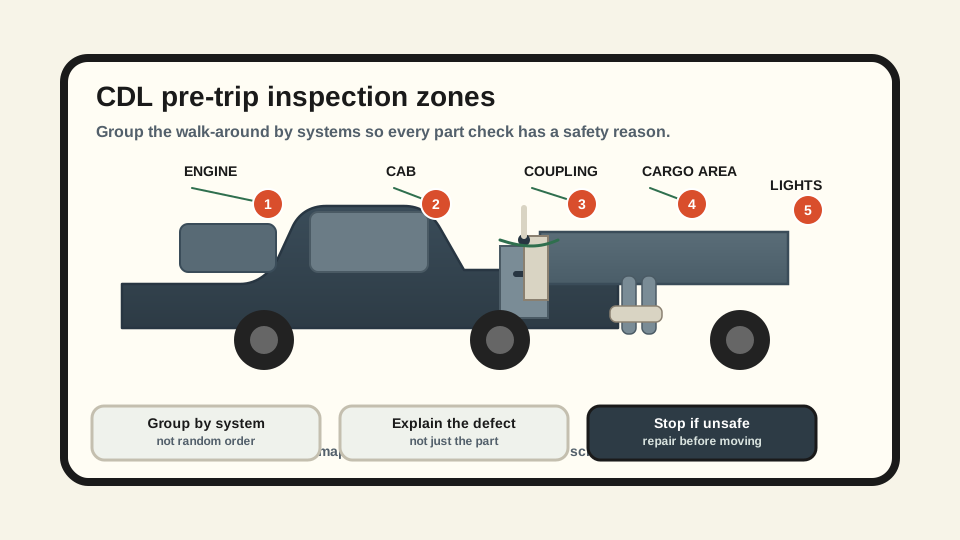
Pre-trip inspection zones
Safety is the most important reason for a pre-trip inspection. Finding and fixing a defect before driving helps prevent breakdowns and crashes on the road.
Study focusUse pre-trip inspection habits to identify unsafe vehicle-system defects before driving.
Common trapMemorizing a walk-around order without understanding which defects make the vehicle unsafe.
Question 6
What is the most common cause of serious vehicle skids?
Most serious skids result from driving too fast for road conditions, over-braking, over-steering, or over-accelerating. Speed is the primary factor in losing traction.
Study focusUse pre-trip inspection habits to identify unsafe vehicle-system defects before driving.
Common trapMemorizing a walk-around order without understanding which defects make the vehicle unsafe.
Question 7
What should you do if your steering feels heavy or the vehicle pulls to one side?
Heavy steering or pulling to one side is a strong indicator of a front tire blowout or severe under-inflation. You must stop safely and inspect the tires immediately.
Study focusUse pre-trip inspection habits to identify unsafe vehicle-system defects before driving.
Common trapMemorizing a walk-around order without understanding which defects make the vehicle unsafe.
Question 8
If you must make an emergency stop, how should you brake?
In an emergency, you want to stop as quickly as possible without locking the wheels (controlled braking) or locking and releasing (stab braking) so you maintain steering control.
Study focusUse pre-trip inspection habits to identify unsafe vehicle-system defects before driving.
Common trapMemorizing a walk-around order without understanding which defects make the vehicle unsafe.
Question 9
A double-trailer combination begins to sway after a sudden maneuver. What is the safest priority?
Abrupt correction can make sway worse. The safer priority is controlled steering and speed reduction while keeping the vehicle stable.
Source focusCDL Manual - Doubles and Triples: sway and control
Study focusUse pre-trip inspection habits to identify unsafe vehicle-system defects before driving.
Common trapMemorizing a walk-around order without understanding which defects make the vehicle unsafe.
Question 10
What is the main purpose of a CDL pre-trip inspection?
A pre-trip inspection is a safety check. The driver looks for defects before driving so unsafe conditions can be corrected.